Overview
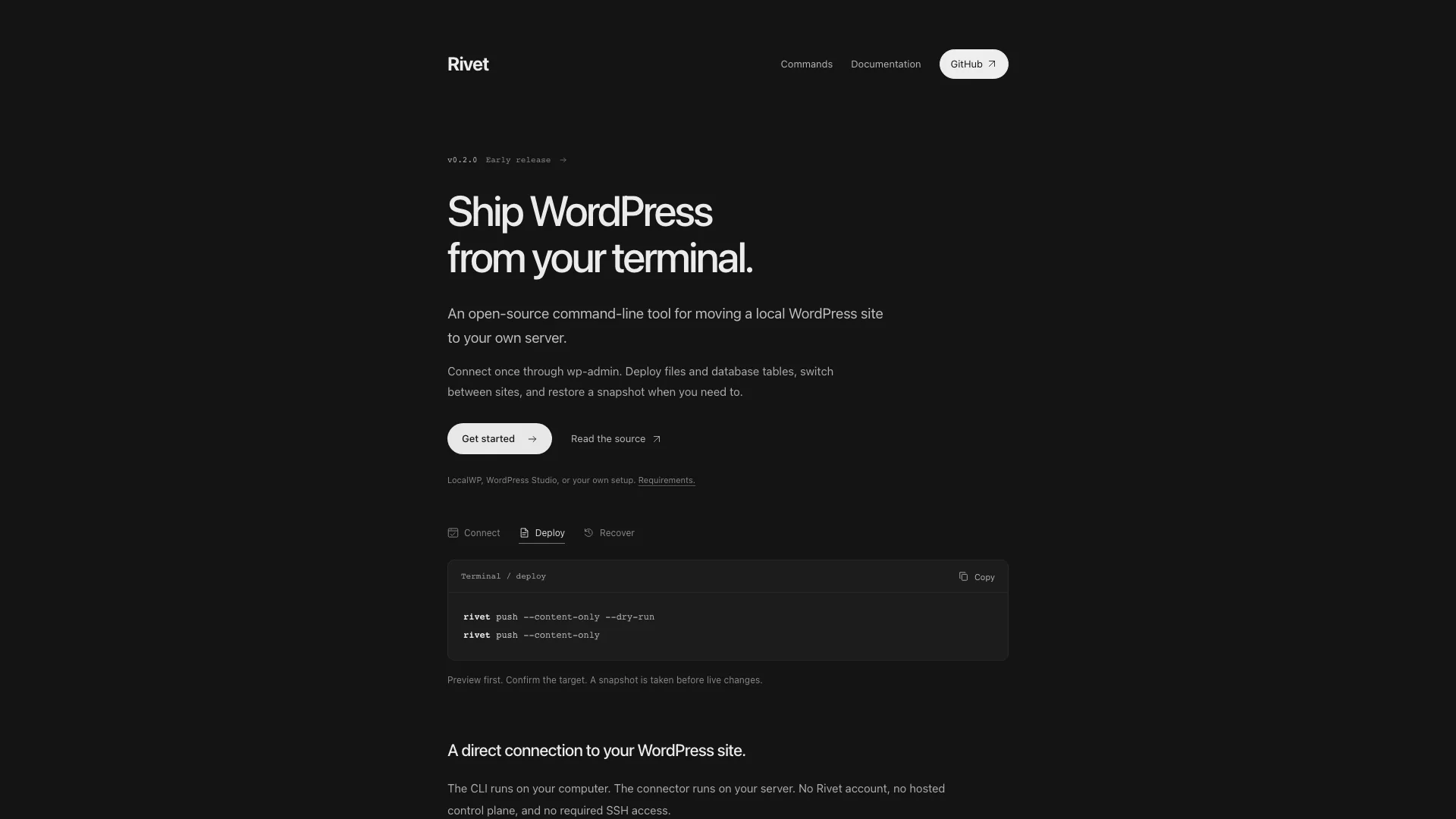
Rivet moves a WordPress site from a local installation to your own hosting with one command. Authorise a small connector plugin once, then deploy files, replace database tables and manage server-side snapshots from the terminal. There is no hosted control plane and no SSH access to set up.
We designed and built the CLI, the connector plugin and the website. It is open source under the MIT licence.
Tech stack
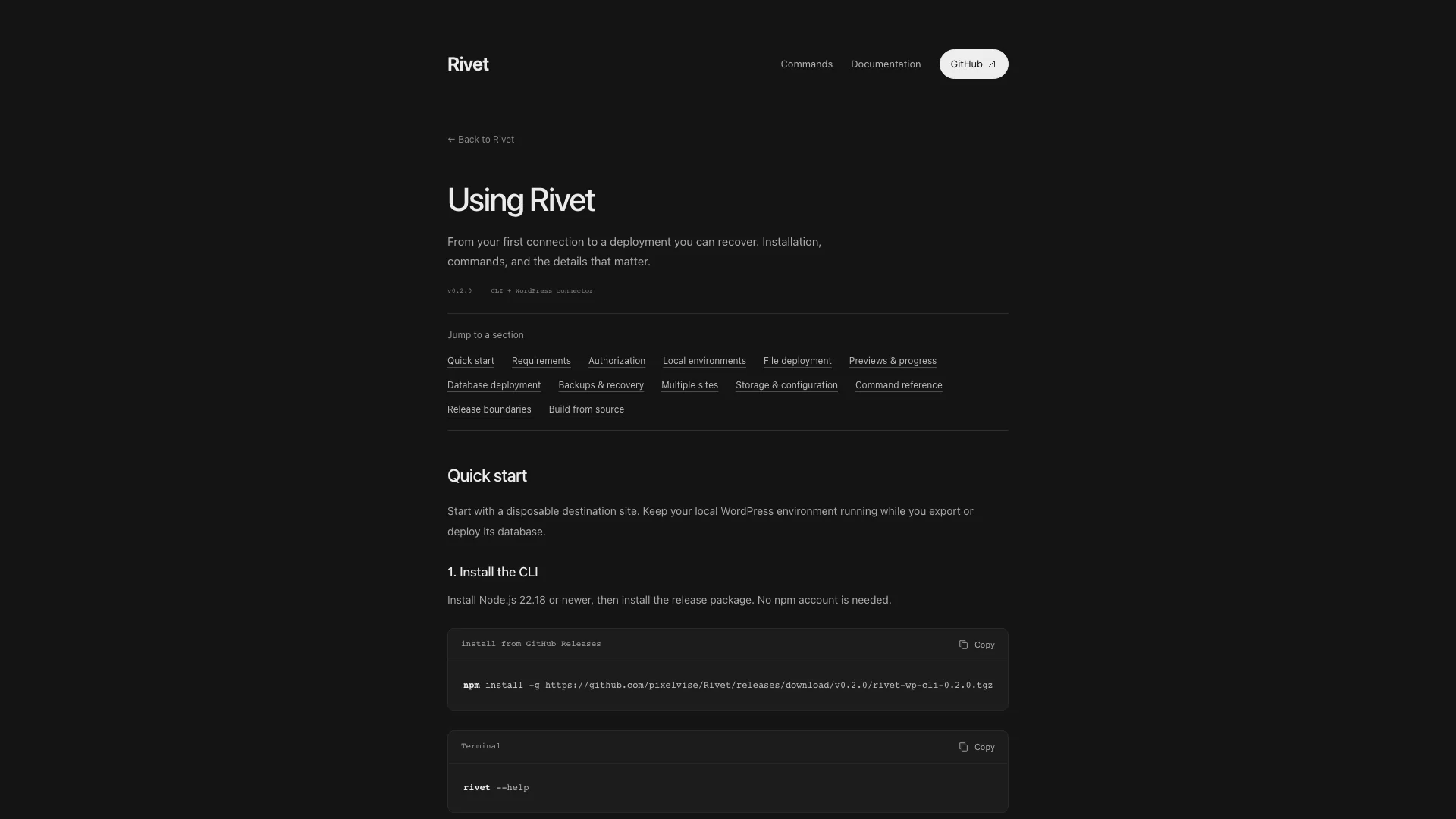
- CLI. Node.js 22 and TypeScript, distributed as a package on GitHub Releases rather than the npm registry.
- Connector. A WordPress plugin in PHP 8.1 that needs WordPress 6.5 and MySQL or MariaDB, installed on the destination site only.
- Website. A Next.js site on Cloudflare with docs and a changelog.
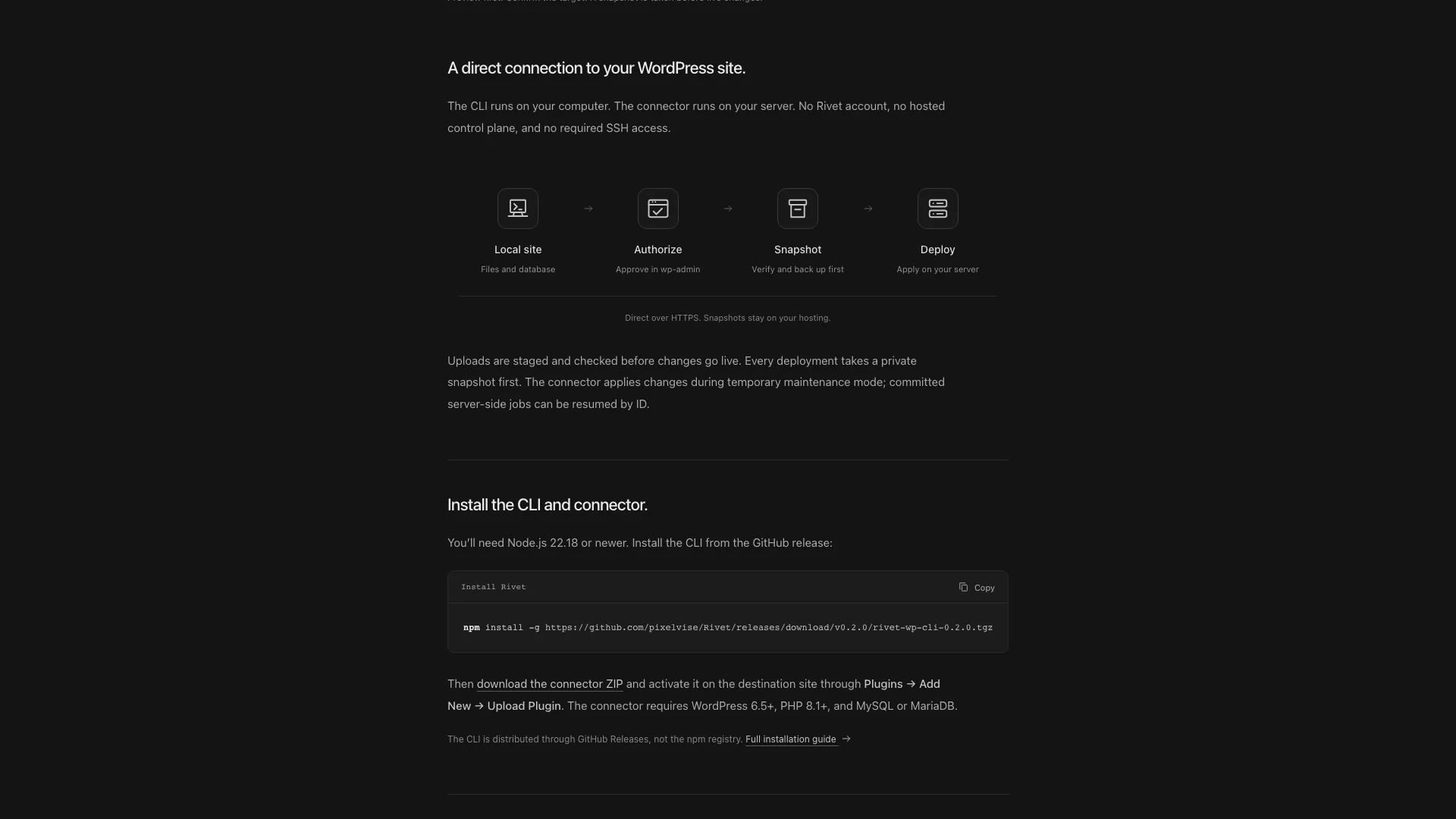
Your computer talks directly to your site
- Approval in the browser.
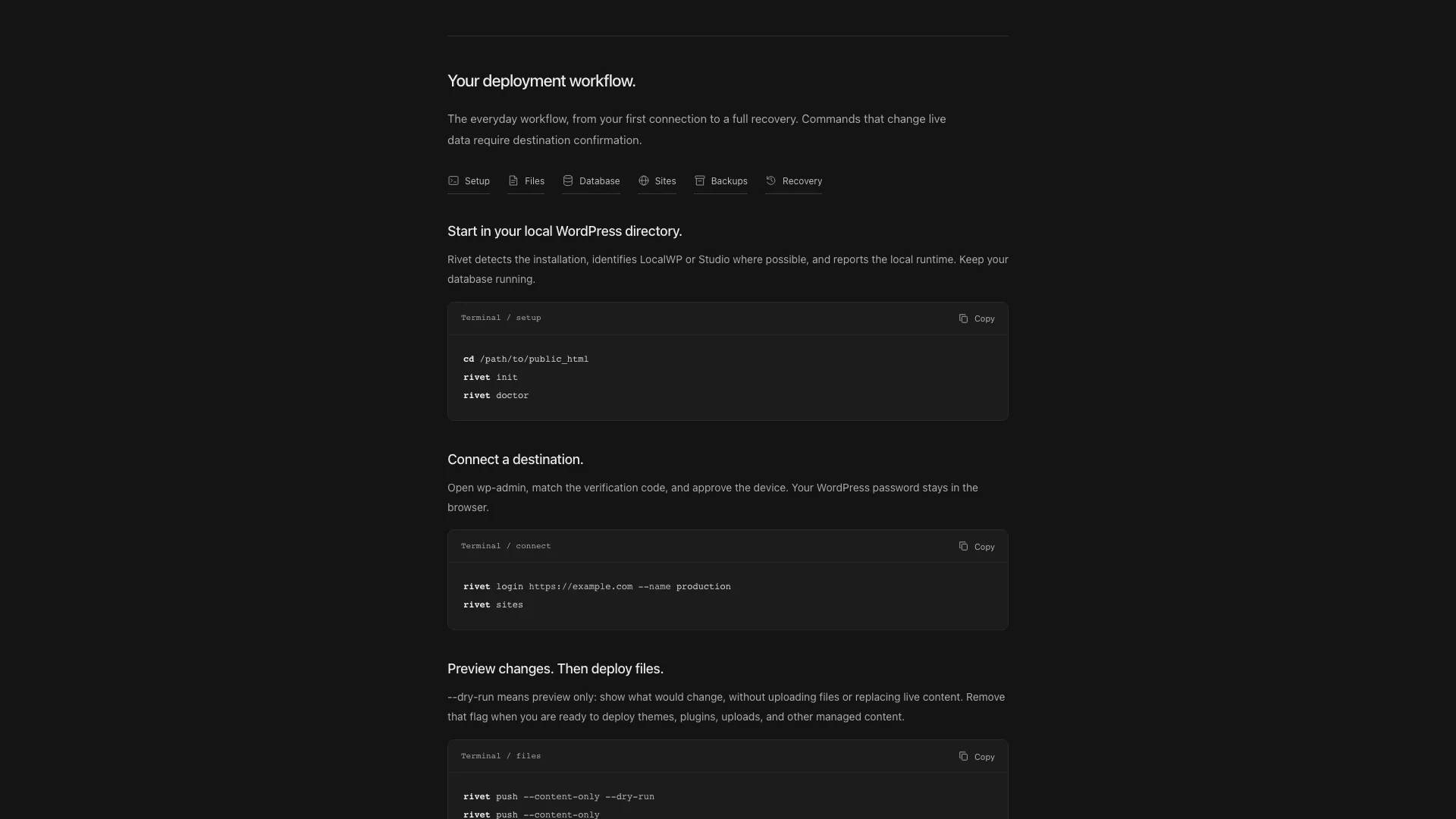
rivet loginopens wp-admin, the administrator compares a verification code with the terminal and approves the device. Rivet never asks for a WordPress password in the terminal. - Detects local sites. Finds local WordPress installations, LocalWP runtimes and sockets, and WordPress Studio.
- Preview before changing anything.
--dry-runscans local files, compares checksums with the destination and reports what would change without uploading anything. - Checksummed chunks. Files transfer in checksummed chunks with readable progress, and long jobs on the server can be resumed or cancelled before live changes begin.
- Database moves. Deploy all source tables or selected table groups, with local URLs and serialised WordPress values rewritten for the destination.
Safe by default
Every deployment creates a private, timestamped snapshot before touching live files or tables, and a snapshot can restore the database and managed files. Destructive operations ask you to type the destination URL in full, and scripts must pass an explicit confirm flag.
Our Role at Pixelvise
Pixelvise handled the work end to end:
- CLI design and implementation
- WordPress connector plugin and its security model
- Documentation and release process
- Product website