Overview
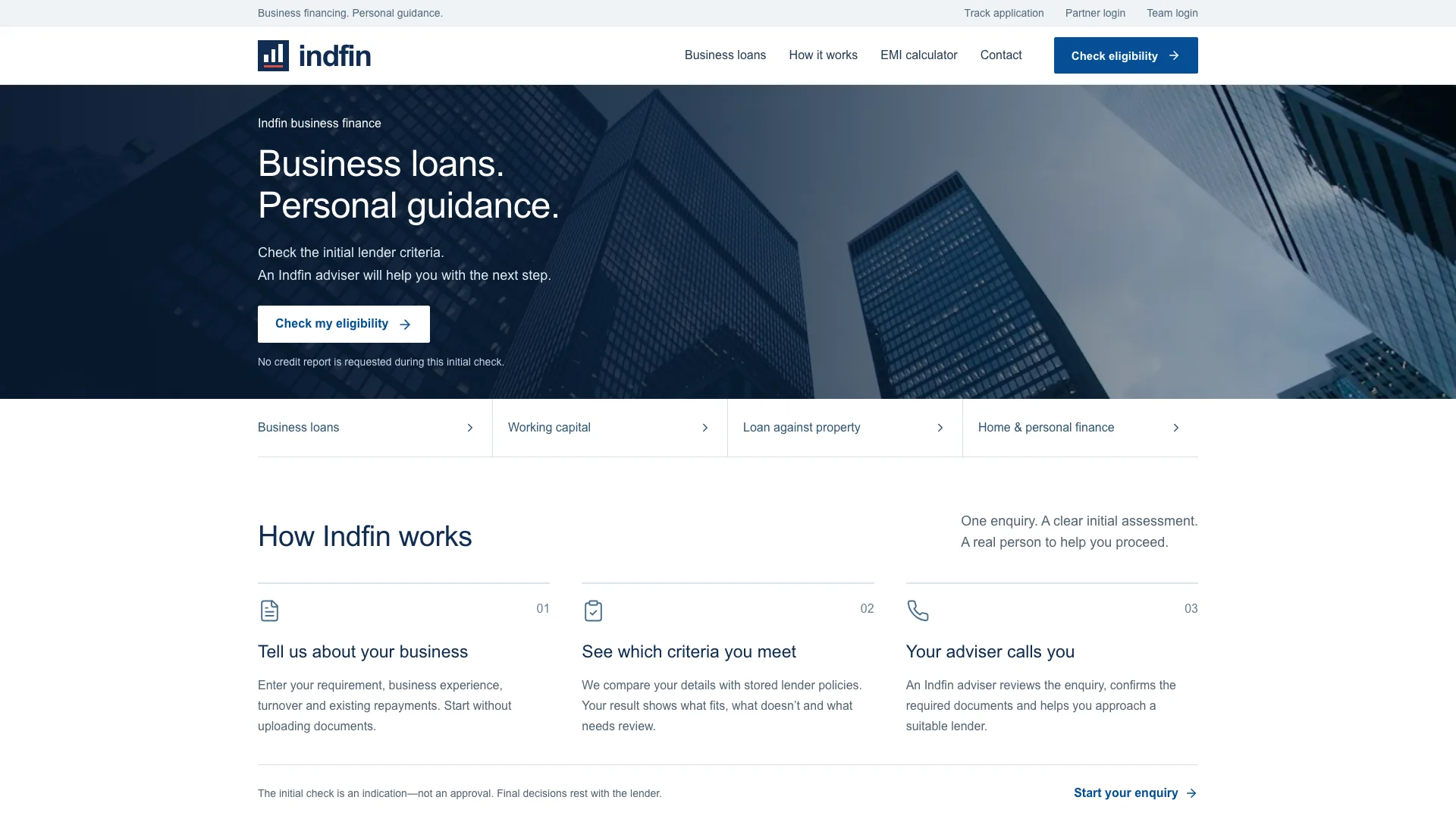
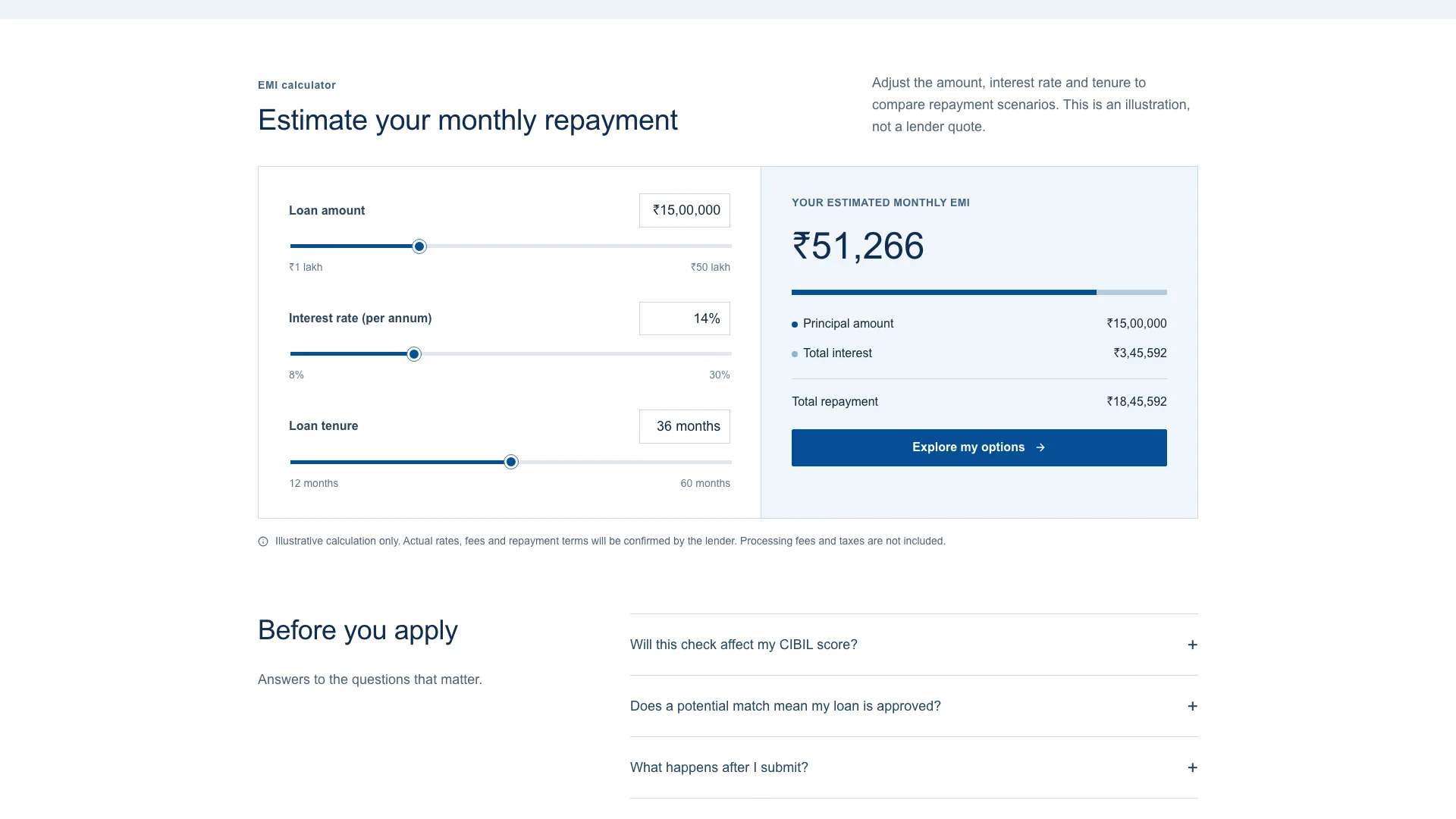
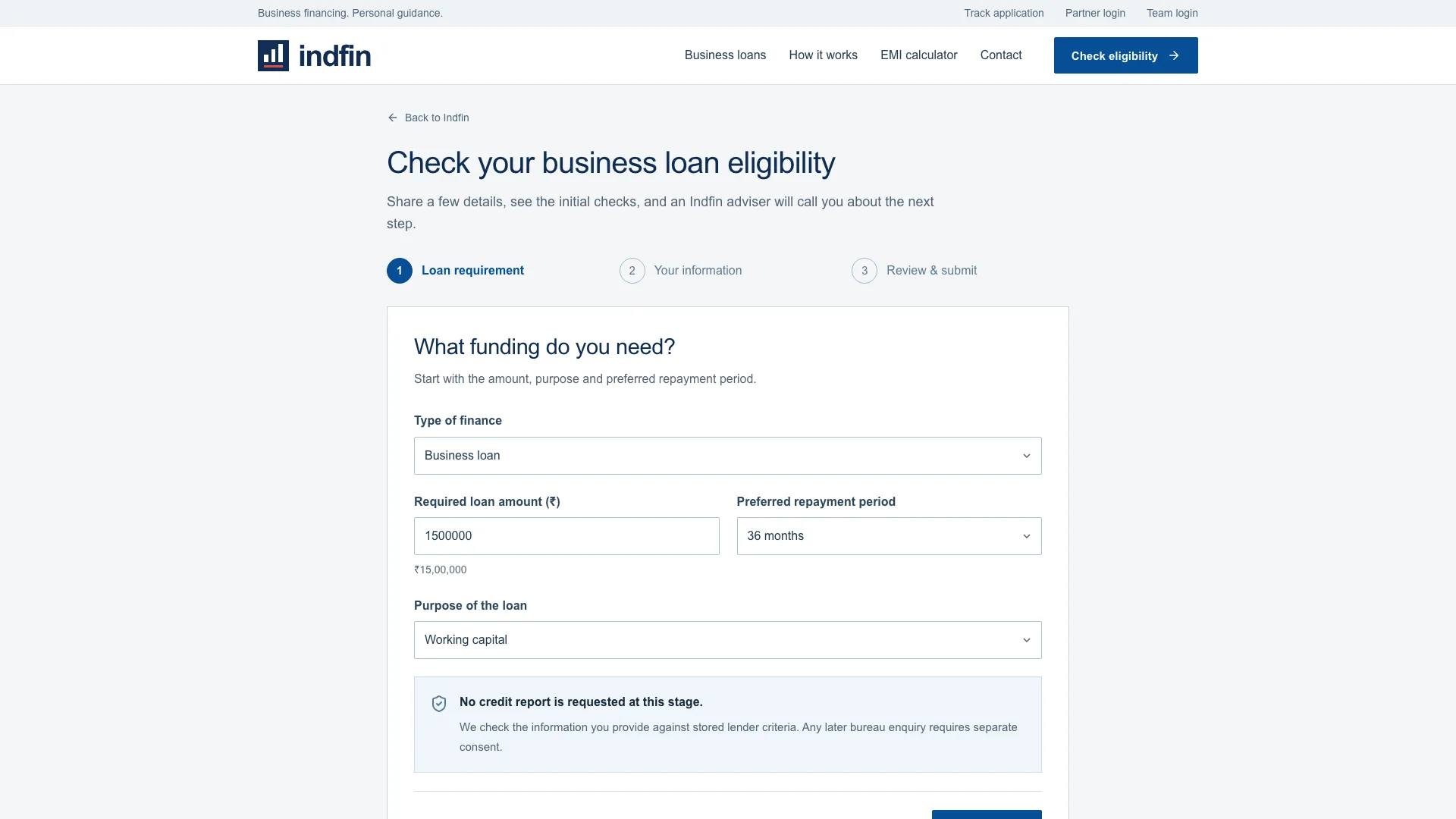
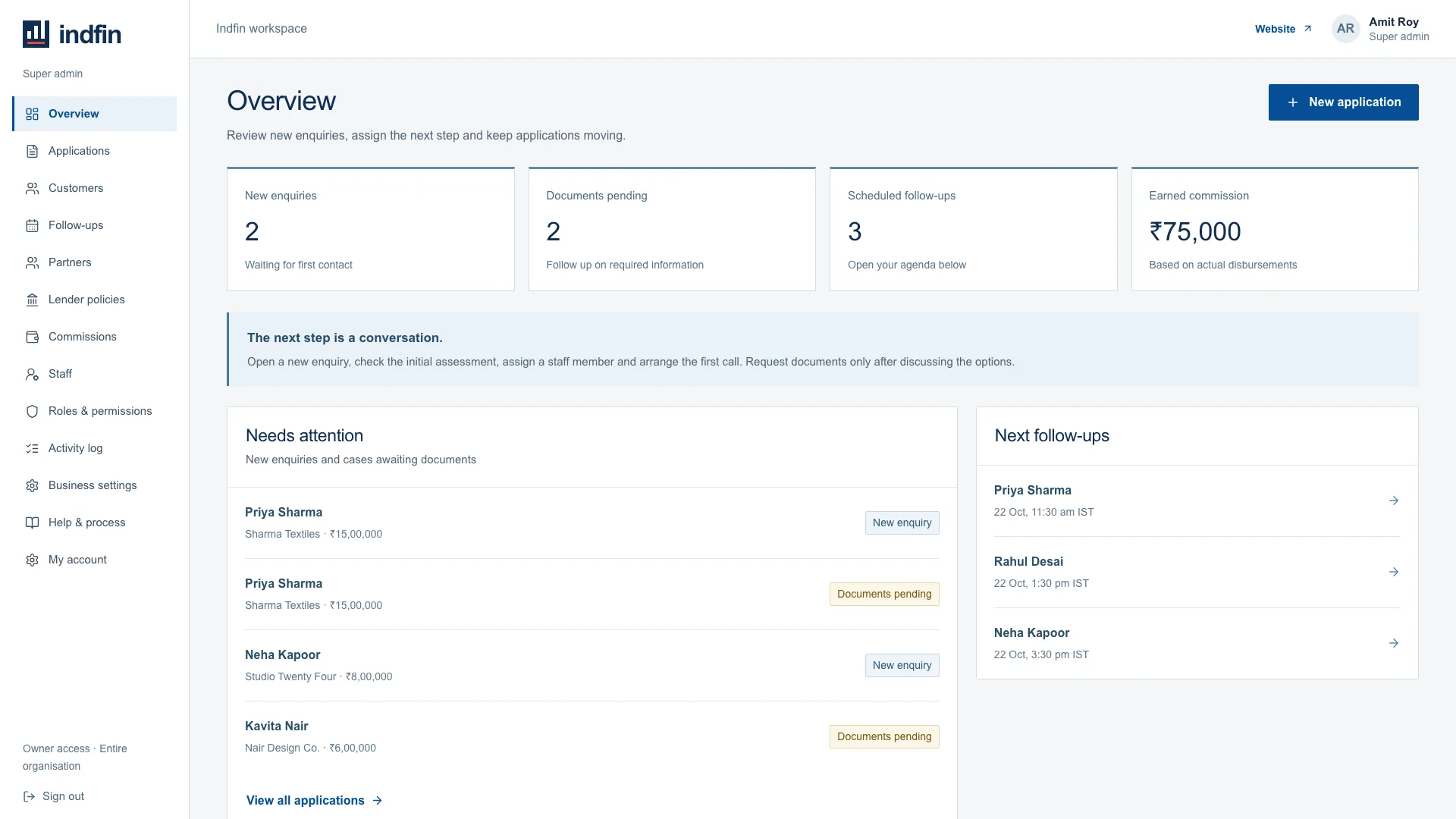
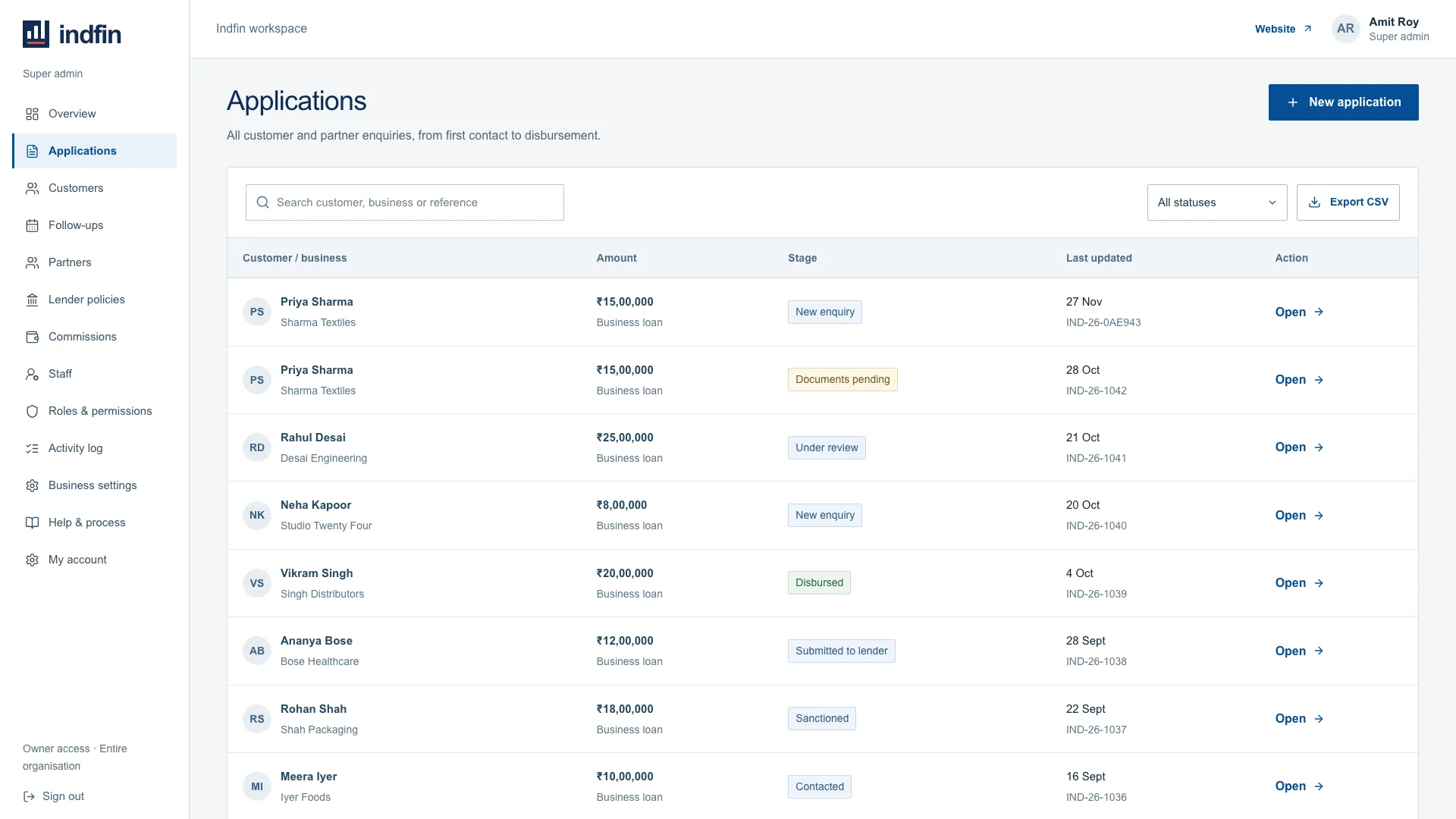
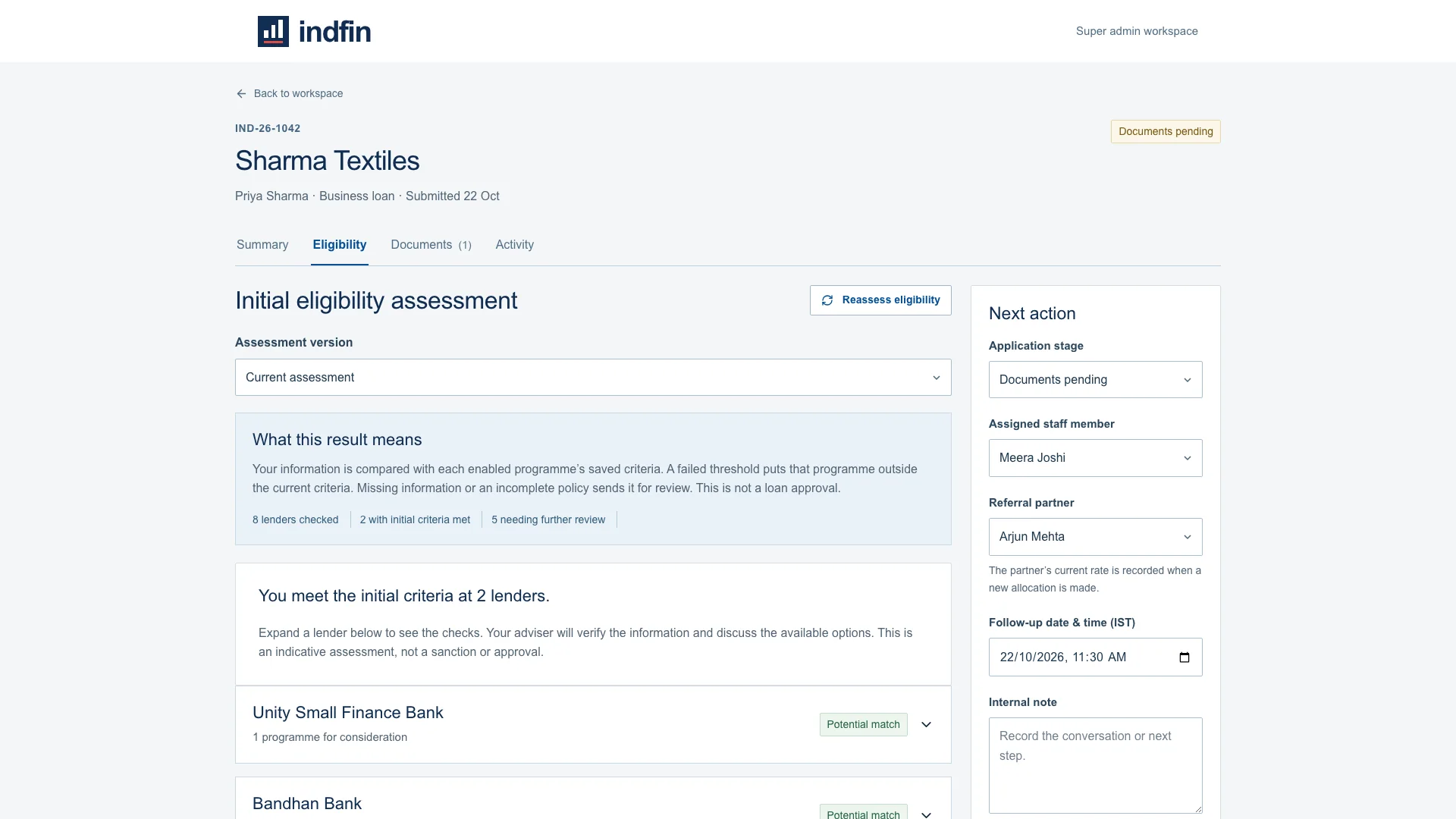
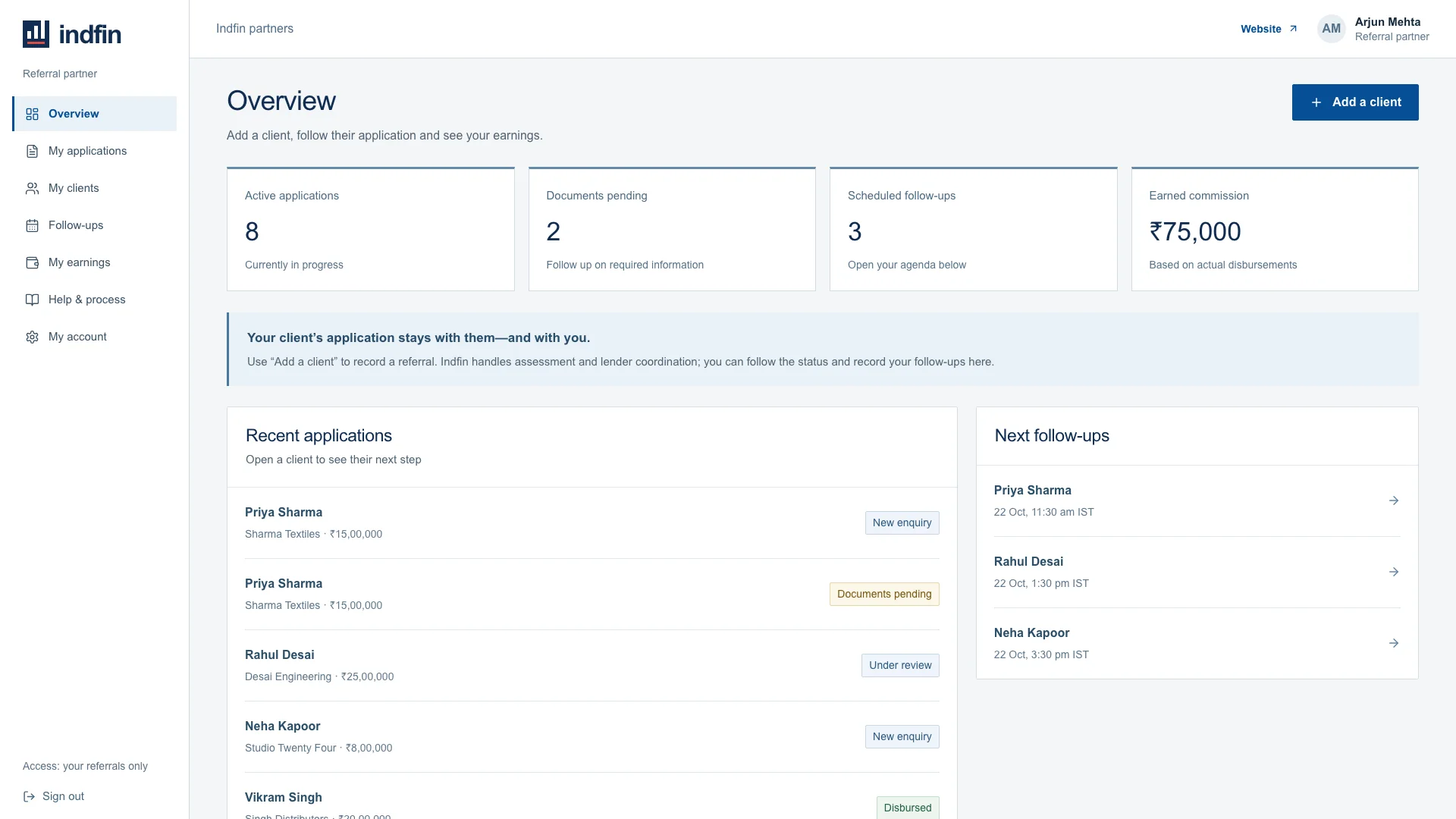
Indfin helps business owners find financing. A customer shares a few details, sees which lender criteria they appear to meet and why, and an adviser follows up. Partners bring their own clients and track them, and the team runs everything from one workspace.
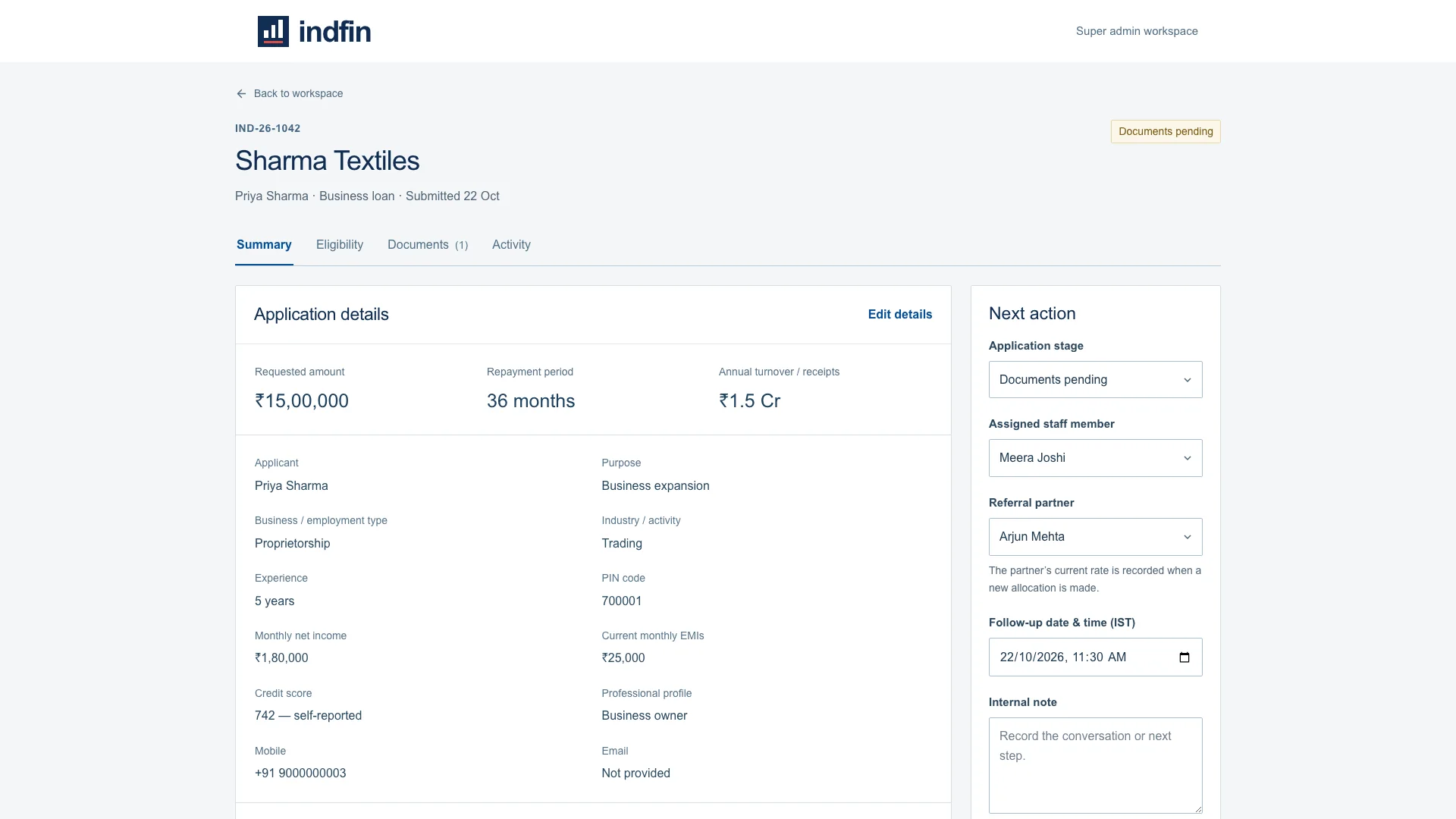
We designed and built the public website and the three workspaces behind it. It records and screens enquiries; the adviser controls the sales process, and nothing is sent to a lender or approved automatically.
Tech stack
- Application. Next.js 16 (App Router) with React 19 and TypeScript 5.9, with Zod 4 validating every request. All operations are exposed under
/api/v1so a native app can reuse them later. - Persistence. A SQLite repository with WAL and a busy timeout for one persistent deployment, with PostgreSQL as the intended hosted database. Protected local file storage for documents.
- Security. One-time codes hashed with scrypt, session tokens stored as SHA-256 hashes with a seven-day expiry, authenticator-app two-step sign-in (TOTP with QR set-up and recovery codes), origin checks, persistent rate limits and an audit log.
- Quality. Unit tests for the rules engine, and Playwright end-to-end tests that run the production build in a fresh, isolated data folder: the customer journey, invitations, custom roles, document corrections, commissions, MFA and partner isolation.
An eligibility engine you can explain
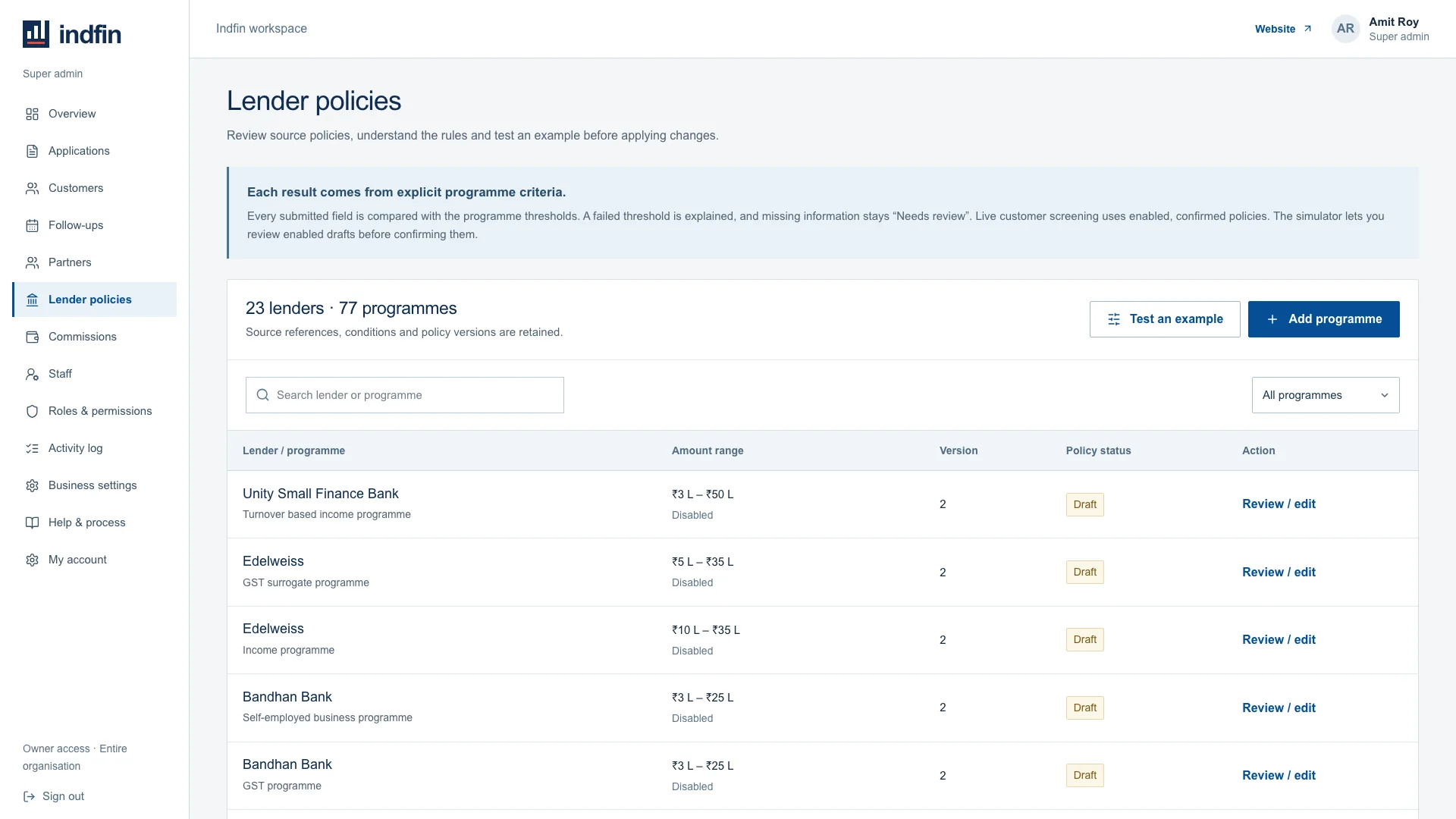
matching.ts is a pure function with no dependency on React, HTTP or the database. It compares an enquiry with stored lender programmes and returns what fits, what does not and what needs review, each with the reason. Conflicting or incomplete source criteria stay explicit review conditions rather than being guessed.
- Versioned policies. Lender rules are source-referenced records with versions. A staff user can edit a policy, run a test case through a simulator, enable it, and reassess applications explicitly, with the assessment history preserved.
- Provider-independent. PAN and bureau providers sit behind contracts that are separate from the form and rules, so a provider can be connected later without changing the engine.
Permissions that live on the server
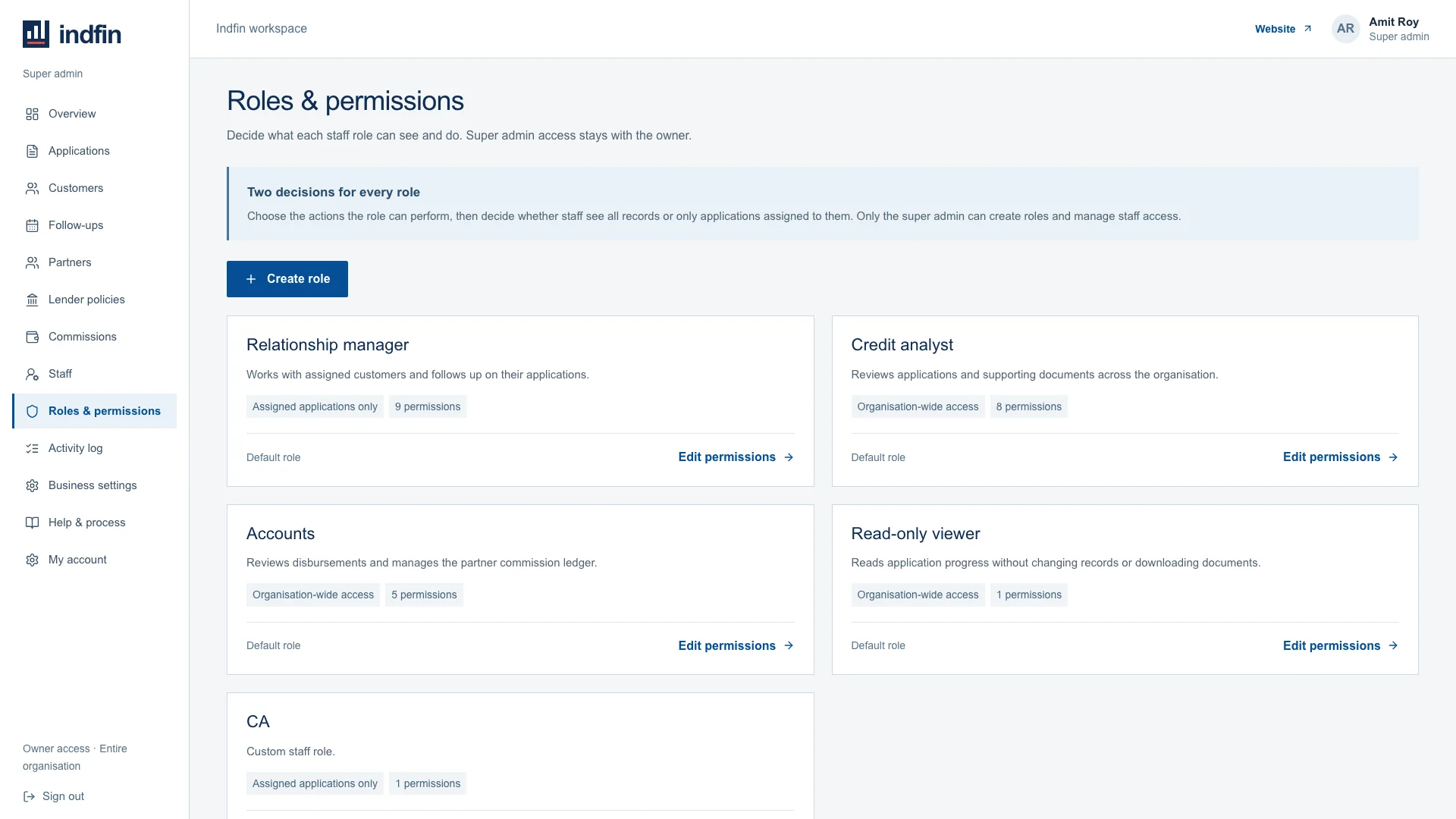
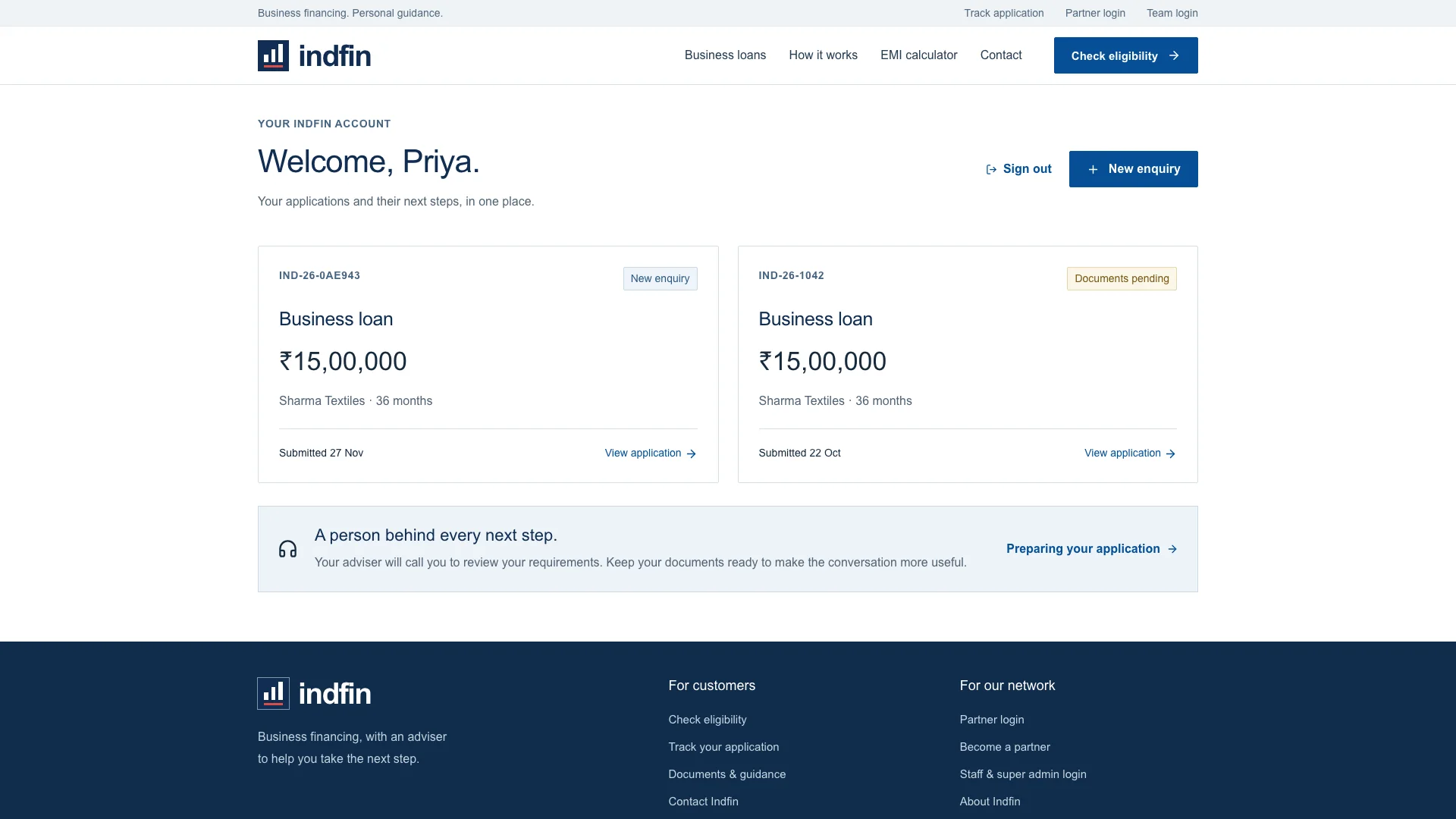
Customers see only their own applications; partners see only the applications assigned to them; staff roles can be configured as assigned-only or organisation-wide. Every check is made in the API, not the interface, and an application the caller may not see returns a 404 so its existence is never disclosed.
- Documents. Uploads are validated by type and size (PDF, JPEG or PNG up to 10 MB), kept outside the public folder, served as private attachments, and virus-scanned in live mode. Customers can accept, correct or replace requested documents.
- Staff. A super admin invites staff by single-use links, defines roles, and assigns data scope. Partners register and are approved.
- Workflow. New enquiry, contacted, documents pending, under review, submitted to lender, sanctioned, disbursed or closed. Entering disbursed requires the actual amount and cannot be reversed through the normal route.
A commission ledger
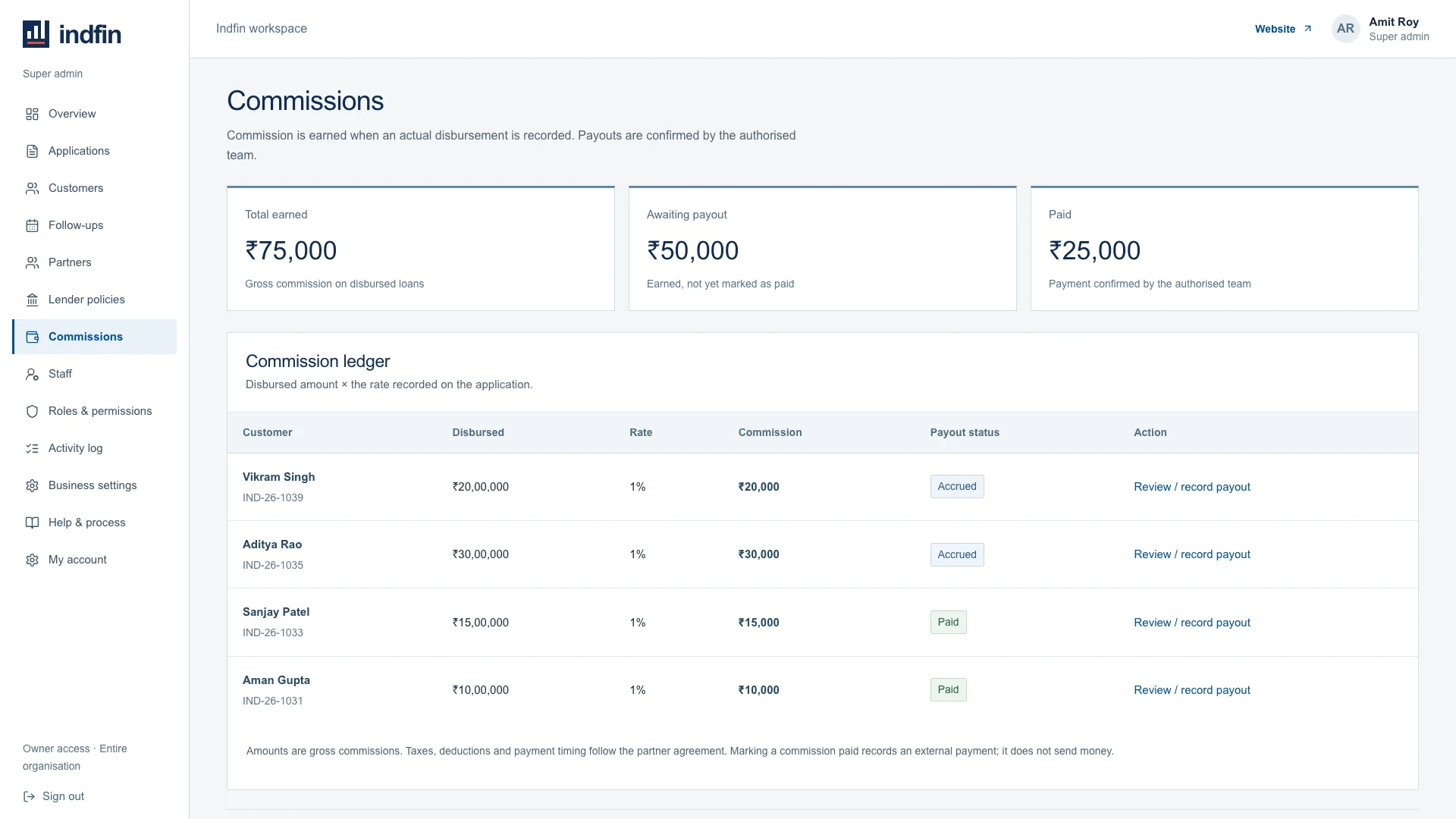
Each application records the partner’s rate when the partner is allocated. Commission is computed from the disbursed amount and the rate snapshotted at allocation, so a later rate change cannot rewrite history. The ledger shows accrued, payout pending and paid, and payouts are confirmed by operations rather than triggered by the software.
Built for review and handover
A private review mode lets the owner open the platform as each role with fictional accounts, behind a separate access key that is disabled in production. A client operating guide is printable to PDF, and a deployment bundle covers the persistent server, encrypted snapshots and restore.
Our Role at Pixelvise
Pixelvise handled the work end to end:
- Product, workflow and permission design
- UI/UX with a restrained banking style and readable type
- Full-stack build: website, customer account, partner portal and staff workspace
- Rules engine, lender policy model and commission ledger
- Security, test suite and deployment tooling