Overview
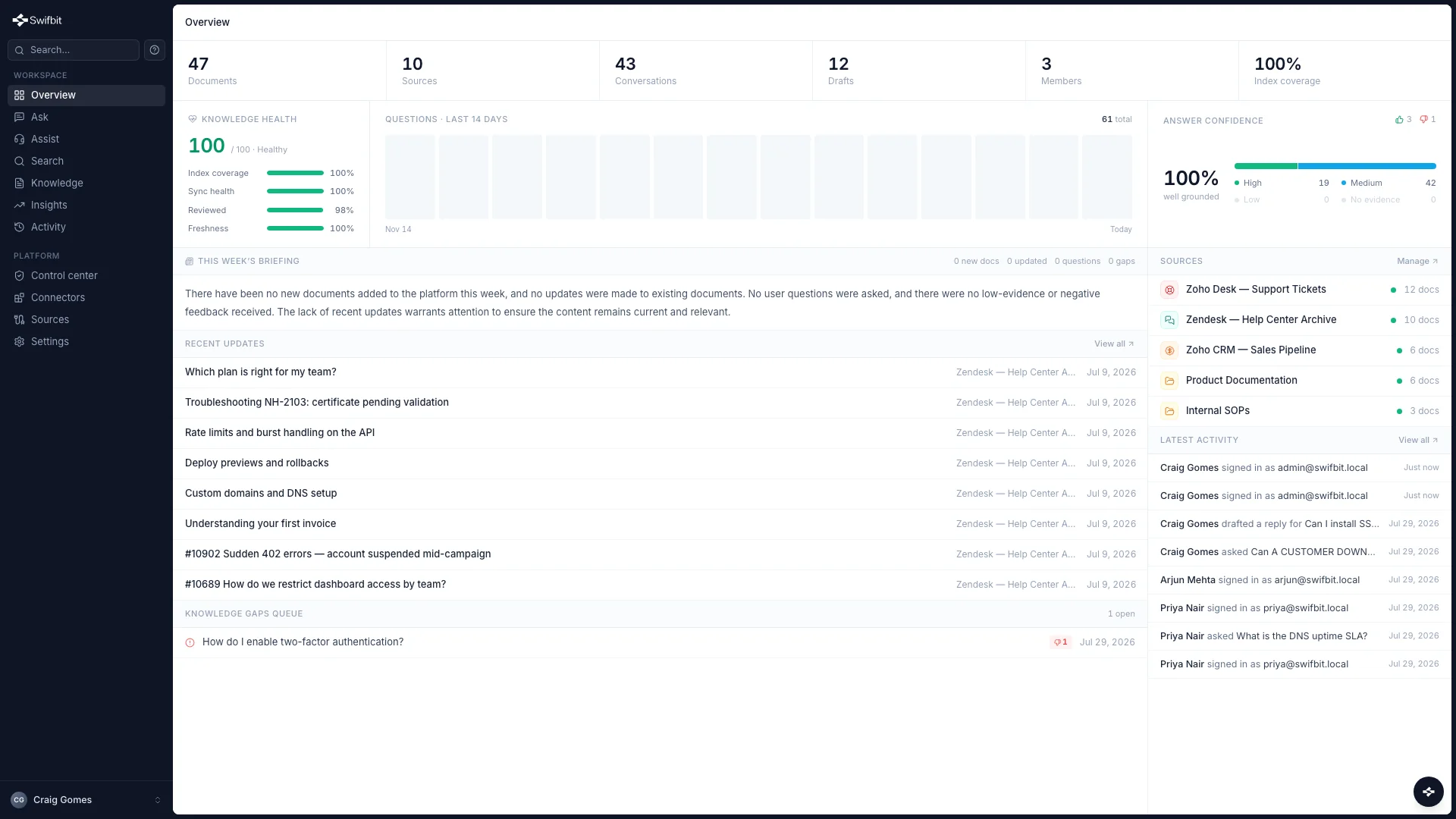
Swifbit connects documentation, tickets, CRM notes, email and internal knowledge into one self-hosted memory for a company, and answers questions from it with cited sources. It is built to make support agents and sales engineers faster and more consistent, not to replace them.
Pixelvise designed and engineered the whole product: the knowledge model, the retrieval engine, the connector runtime, the web app and the way it installs on a customer’s own infrastructure.
Tech stack
- Kernel. Node.js with NestJS 10 and TypeScript. Auth with JWT and bcrypt, validation with Zod, uploads with Multer, and a plugin host that runs connectors as supervised child processes.
- Data. PostgreSQL 16 with pgvector as the one required dependency: relational data, full-text search and vectors in one system. Drizzle ORM with SQL migration files (seven so far).
- Web app. React 18 with Vite, TanStack Query, React Router, Tailwind CSS and a Markdown editor with live preview, built to static files that the kernel serves, so the product ships as one container.
- Models. Provider-agnostic: a local Ollama model out of the box, or any OpenAI-compatible endpoint with the customer’s own key.
- Packaging. A pnpm monorepo with a shared SDK, ten connector packages, Docker Compose, an install script and a release script that stages versioned bundles with checksums.
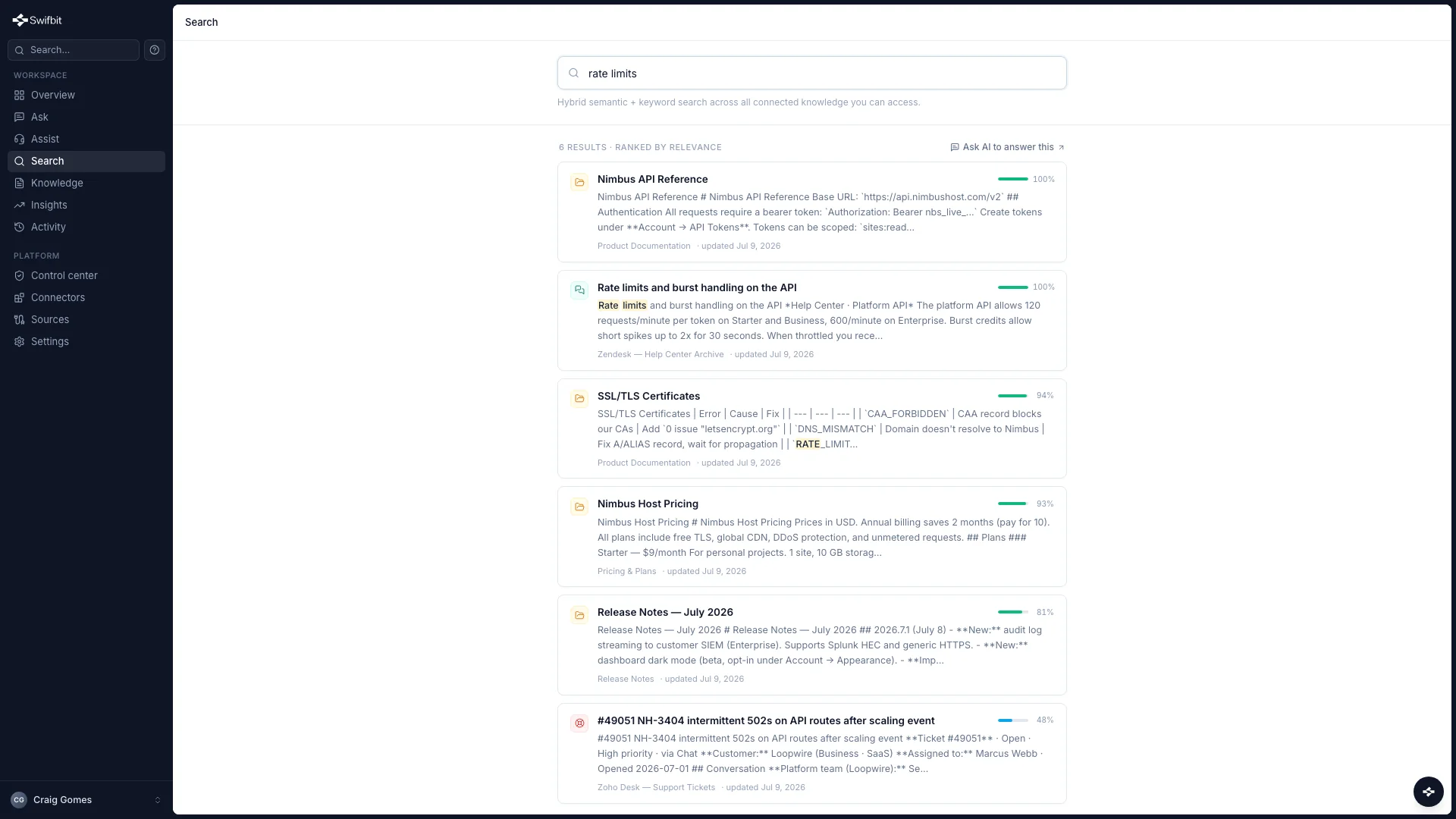
Retrieval you can audit
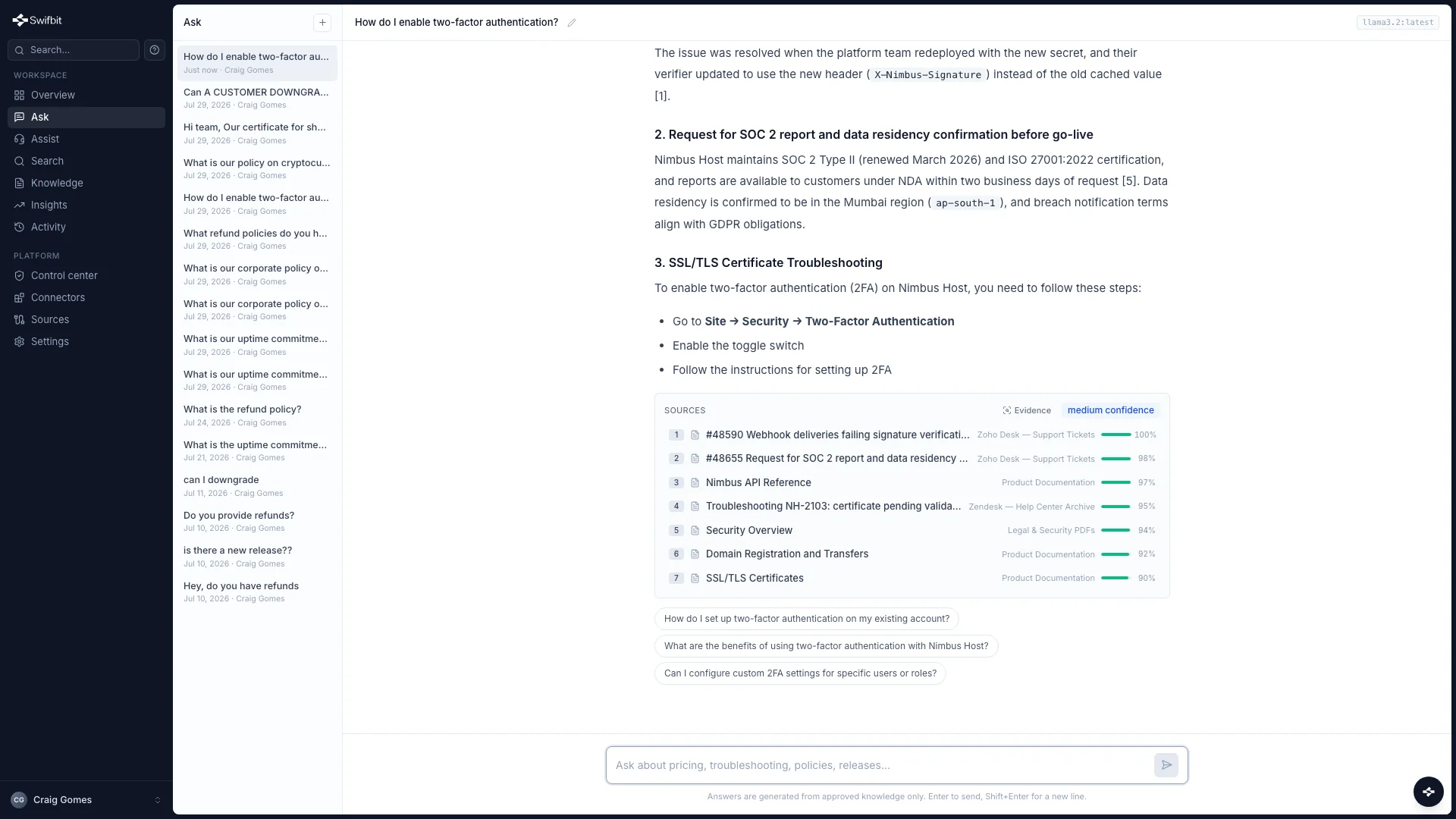
Every question runs a hybrid search: Postgres full-text search and pgvector similarity are run in parallel and merged with reciprocal rank fusion. Results are trimmed by the asking user’s team access and by review state before any answer is composed, so a user never sees knowledge through Swifbit that they could not see at its source.
- Evidence or nothing. Answers are composed only from the retrieved evidence, every claim carries a citation, and a confidence rating comes from how well the evidence agrees and covers the question. Below the threshold the product says it does not know and shows the nearest evidence instead of inventing an answer.
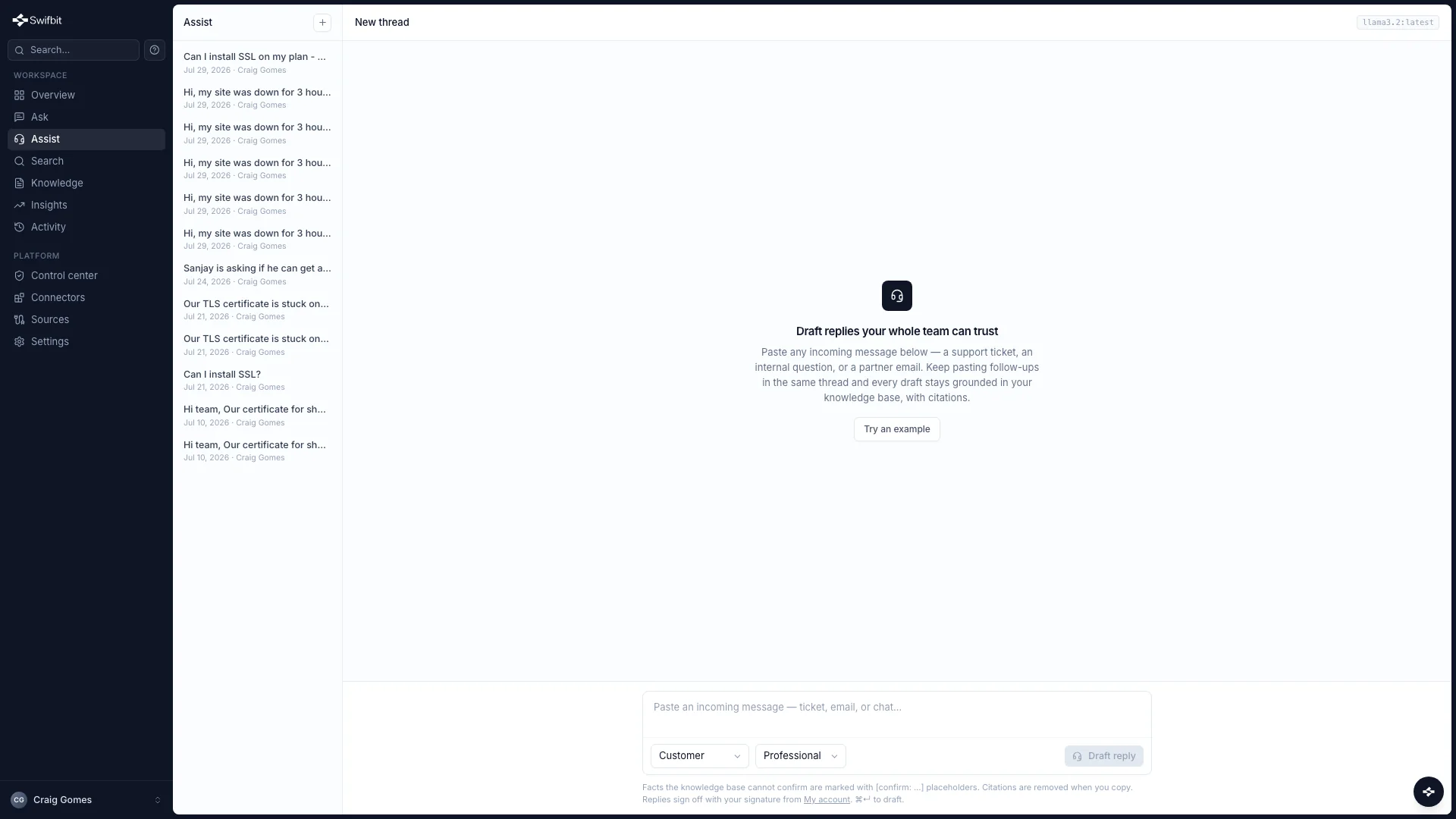
- Assist. A pasted ticket or email, plus an audience and tone, produces a reply drafted only from approved knowledge, with a marker wherever something could not be verified. Threads keep the back-and-forth so follow-ups stay in context. The human always sends the reply.
A processing pipeline you can see into
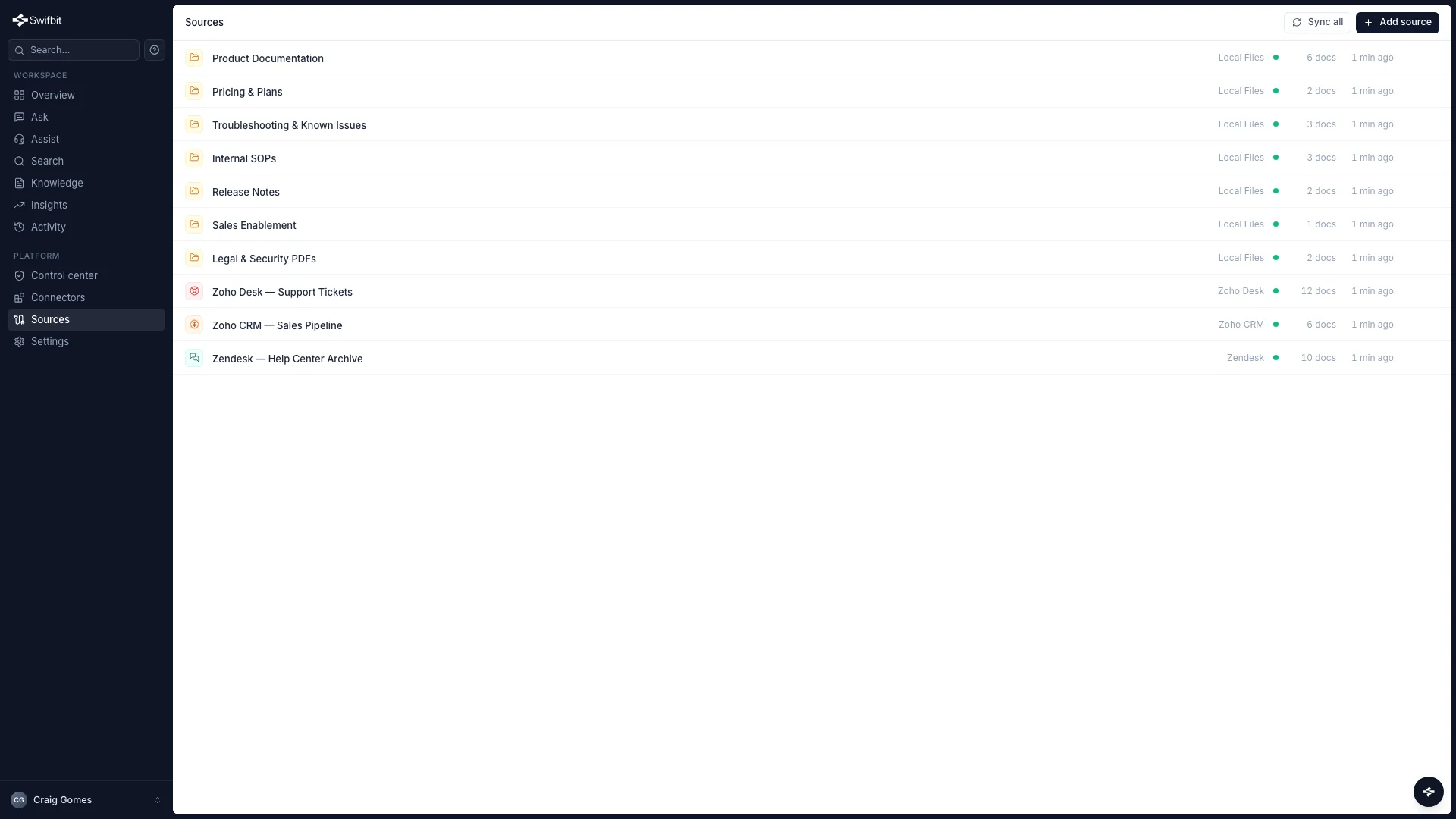
Documents move through acquire, convert to Markdown, chunk, extract metadata, tag, link, embed and index. The chunker is structure-aware, so headings, tables and code blocks are respected. Every stage records progress and can resume after a failure, and a per-source policy can require approval before a document enters the index.
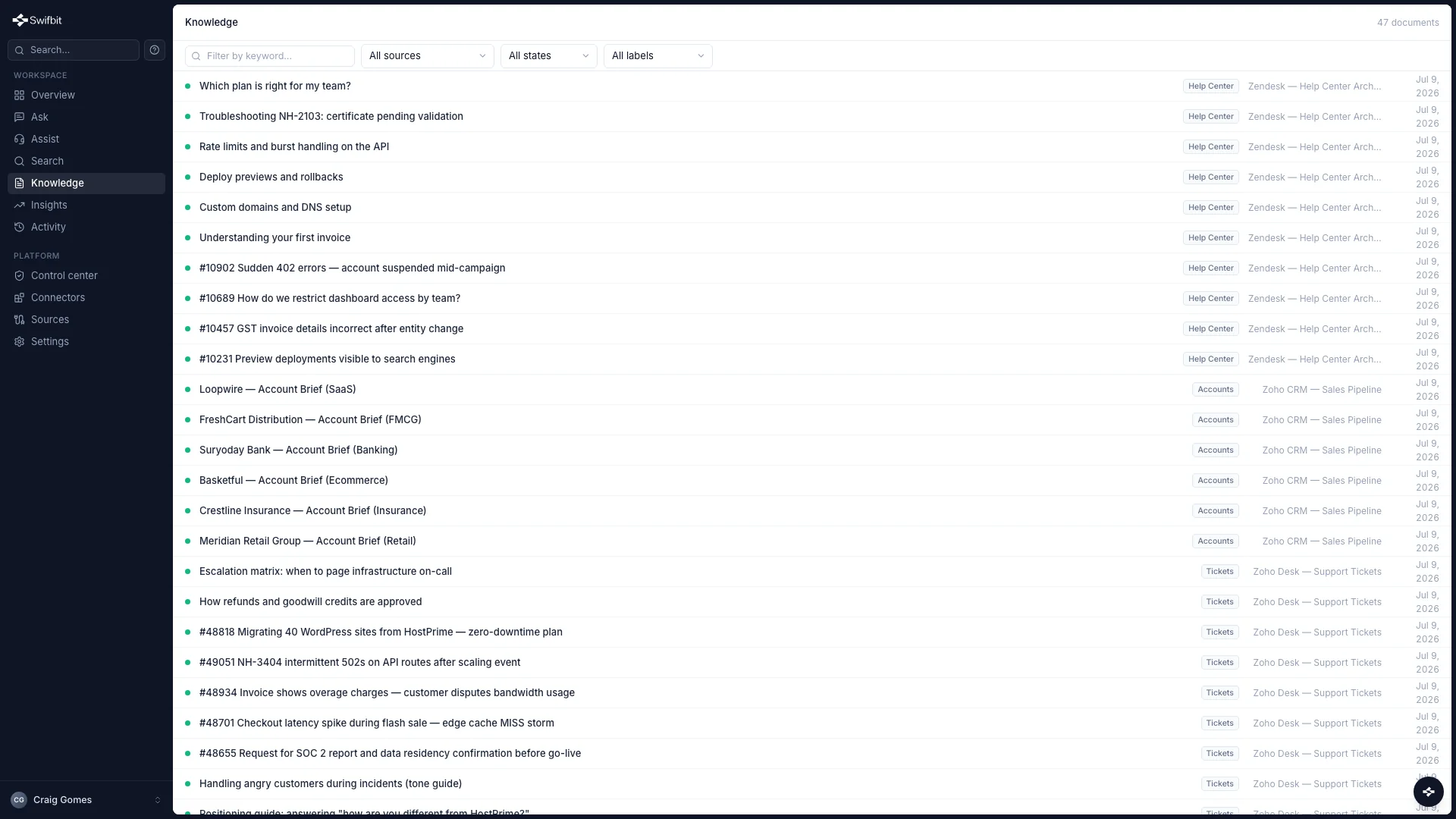
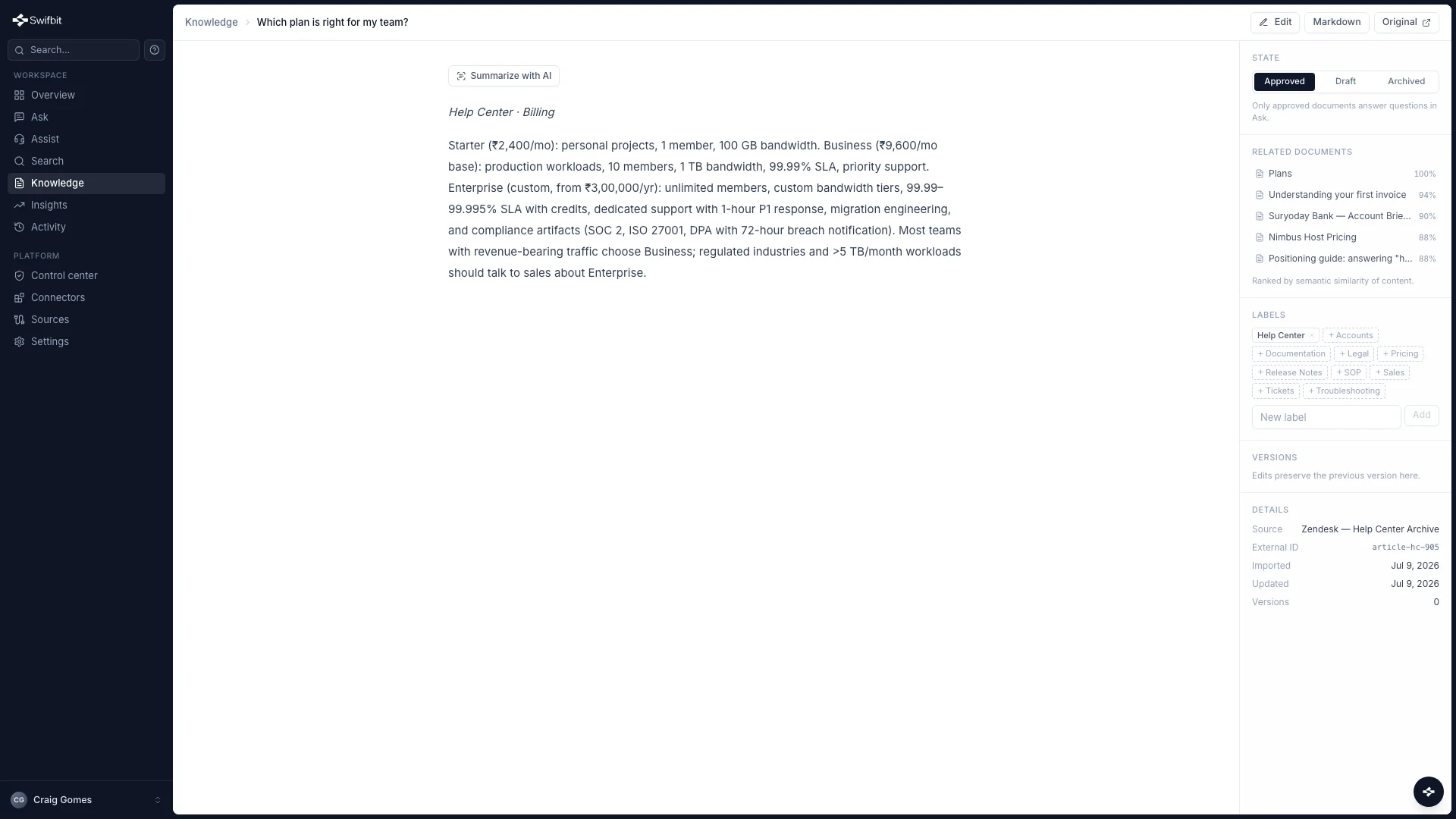
- Knowledge studio. Every imported document is visible and editable, versioned with diff and restore, labelled, and gated by review states.
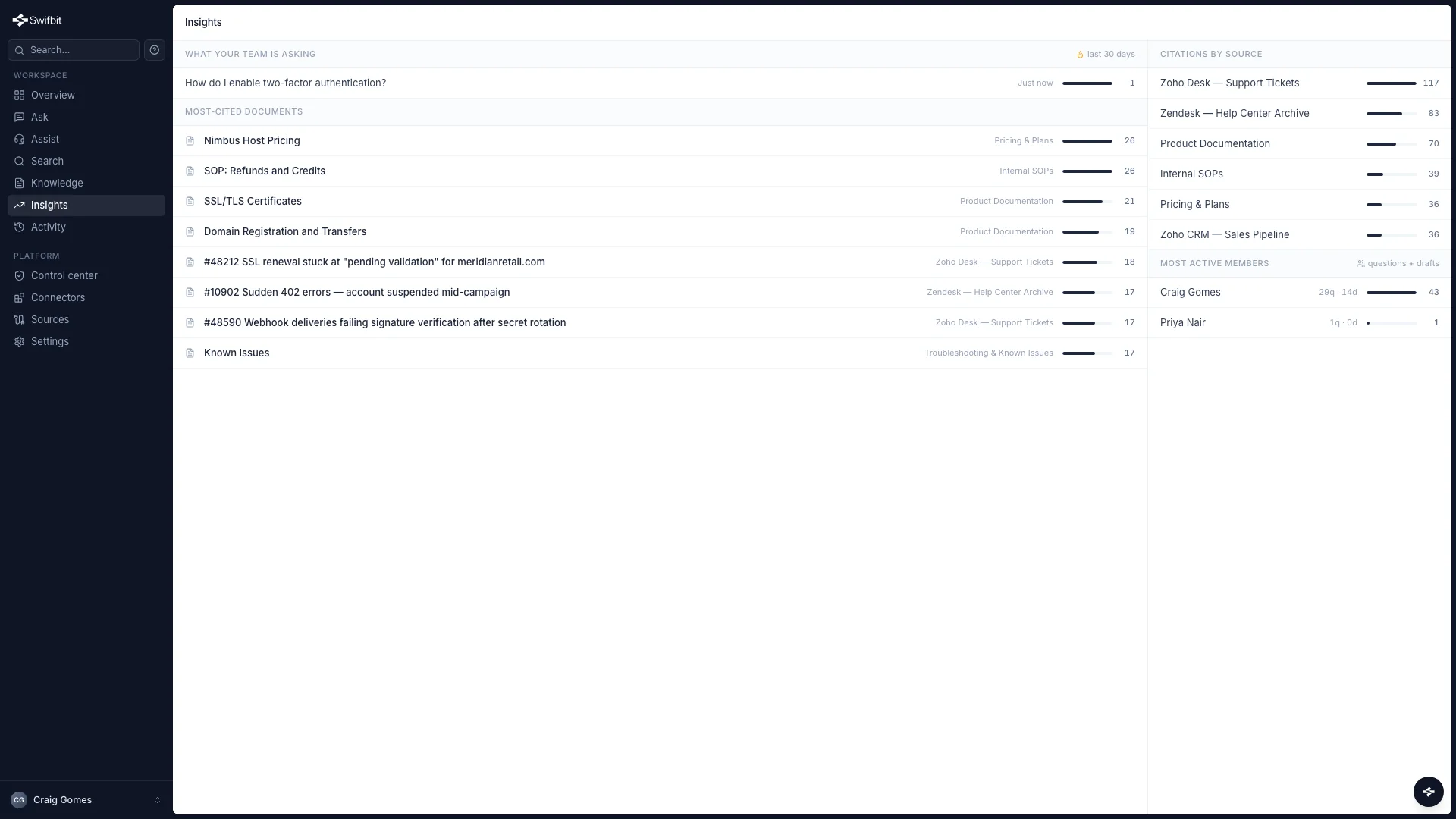
- Insights. A knowledge health score, question volume, answer confidence, a queue of questions the knowledge could not answer, and a weekly briefing.
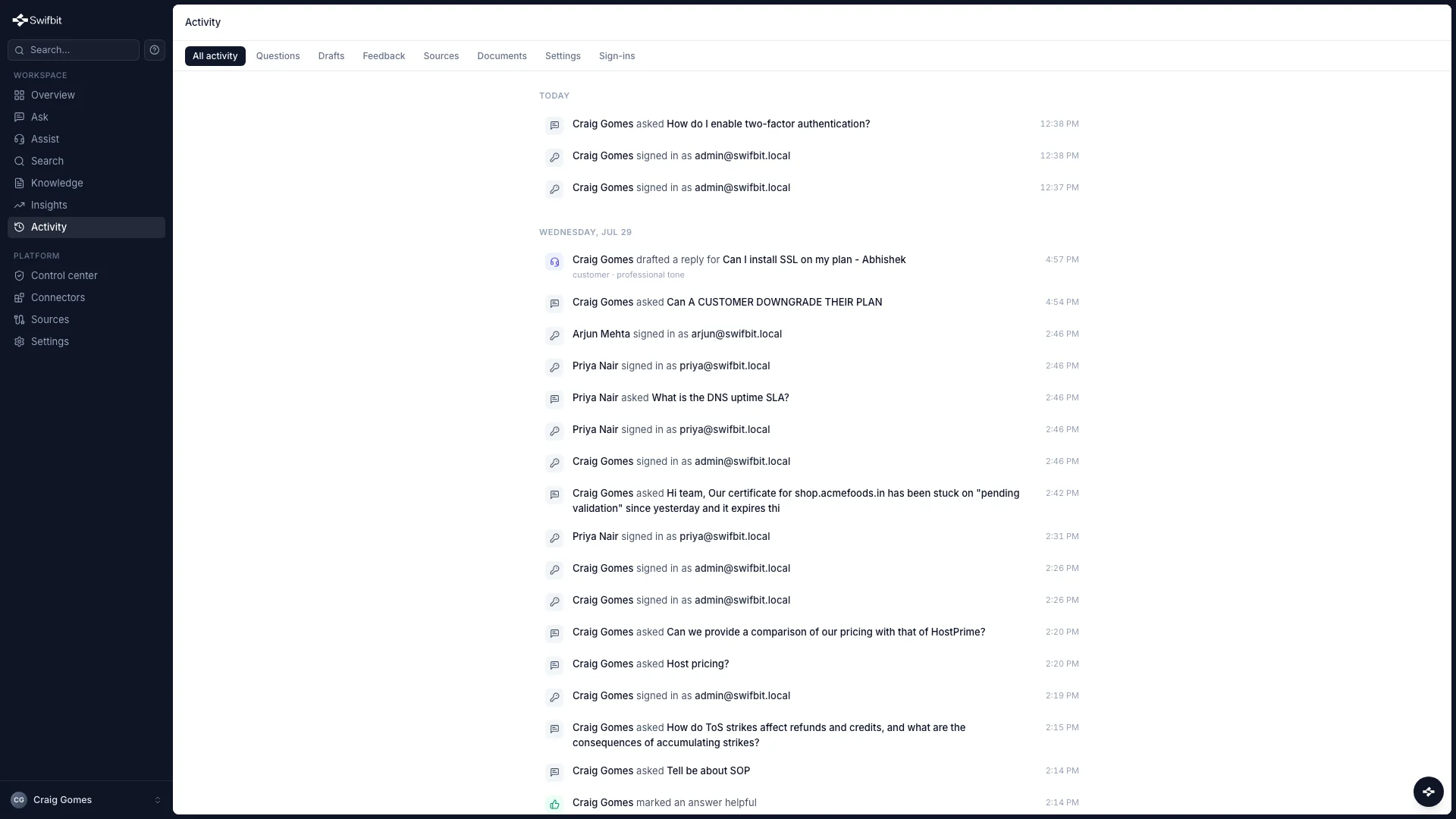
- Activity. A full audit trail of questions, drafts, feedback, syncs, document edits and settings changes.
Connectors as packages
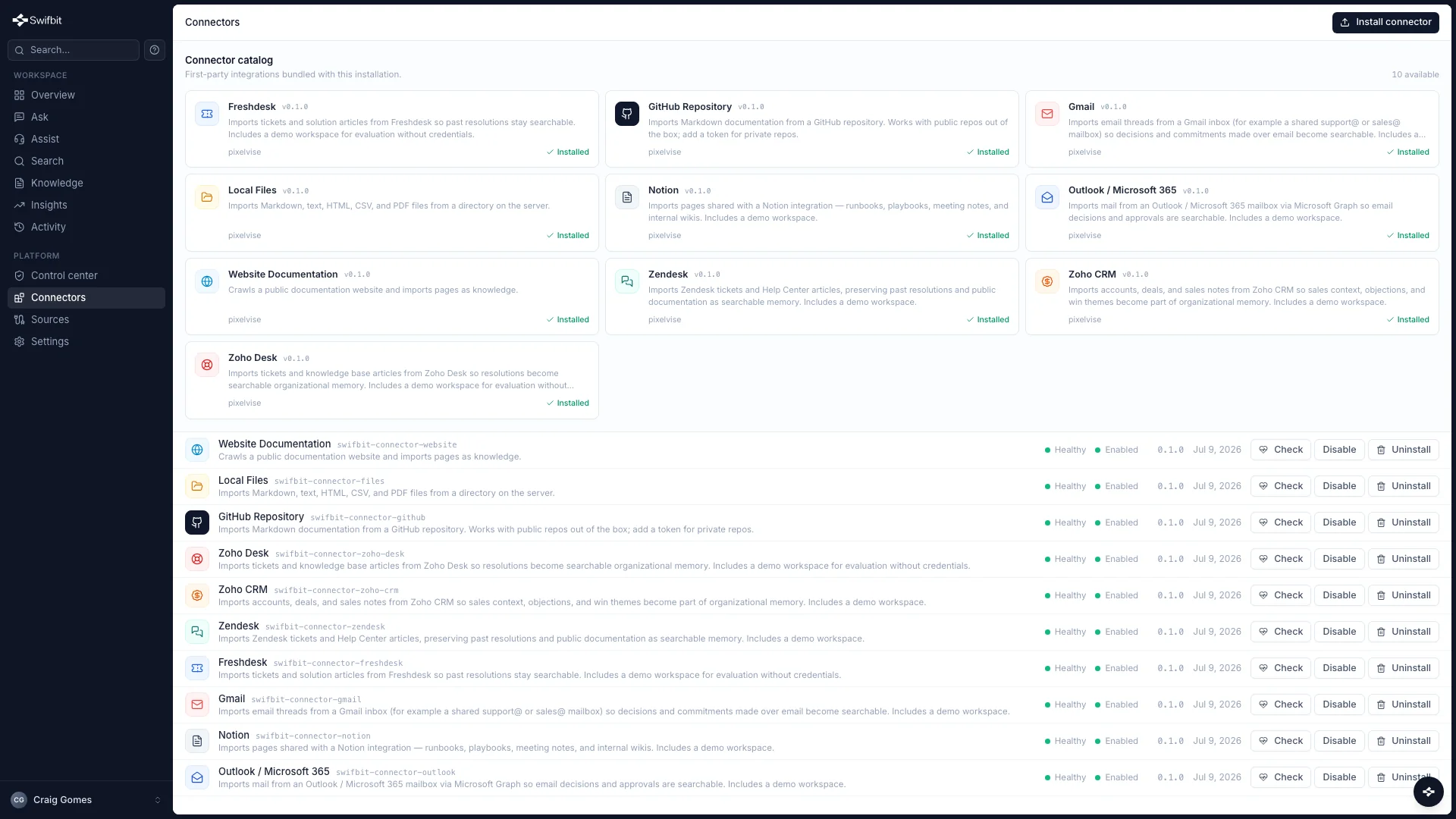
Zendesk, Freshdesk, Zoho Desk, Zoho CRM, Gmail, Outlook, Notion, GitHub, a website crawler and local files are each their own package with a manifest, a schema-driven setup form, encrypted credentials, health checks and sync telemetry. They run in isolated child processes and can be installed without restarting the kernel. Each has a live API mode and a demo workspace, so a product can be evaluated in minutes.
Installable anywhere
The design goal was one container plus PostgreSQL: Docker Compose for a single node, no calls home, and no requirement for any cloud service. Demo workspaces for six industries are included, with fictional data, so a pre-sales demo does not need a customer’s content.
Our Role at Pixelvise
Pixelvise handled the work end to end:
- Product design and UI/UX for the workspace
- Kernel, API, retrieval engine and processing pipeline
- A connector SDK and ten connectors
- Packaging, installers and release tooling for self-hosting