Overview
Keelance is the application Pixelvise uses to run its own agency: clients, proposals, contracts, invoices, projects and tasks in one place, with a portal for clients. It began as a multi-tenant workspace product and is now a private internal tool with team and client sign-in.
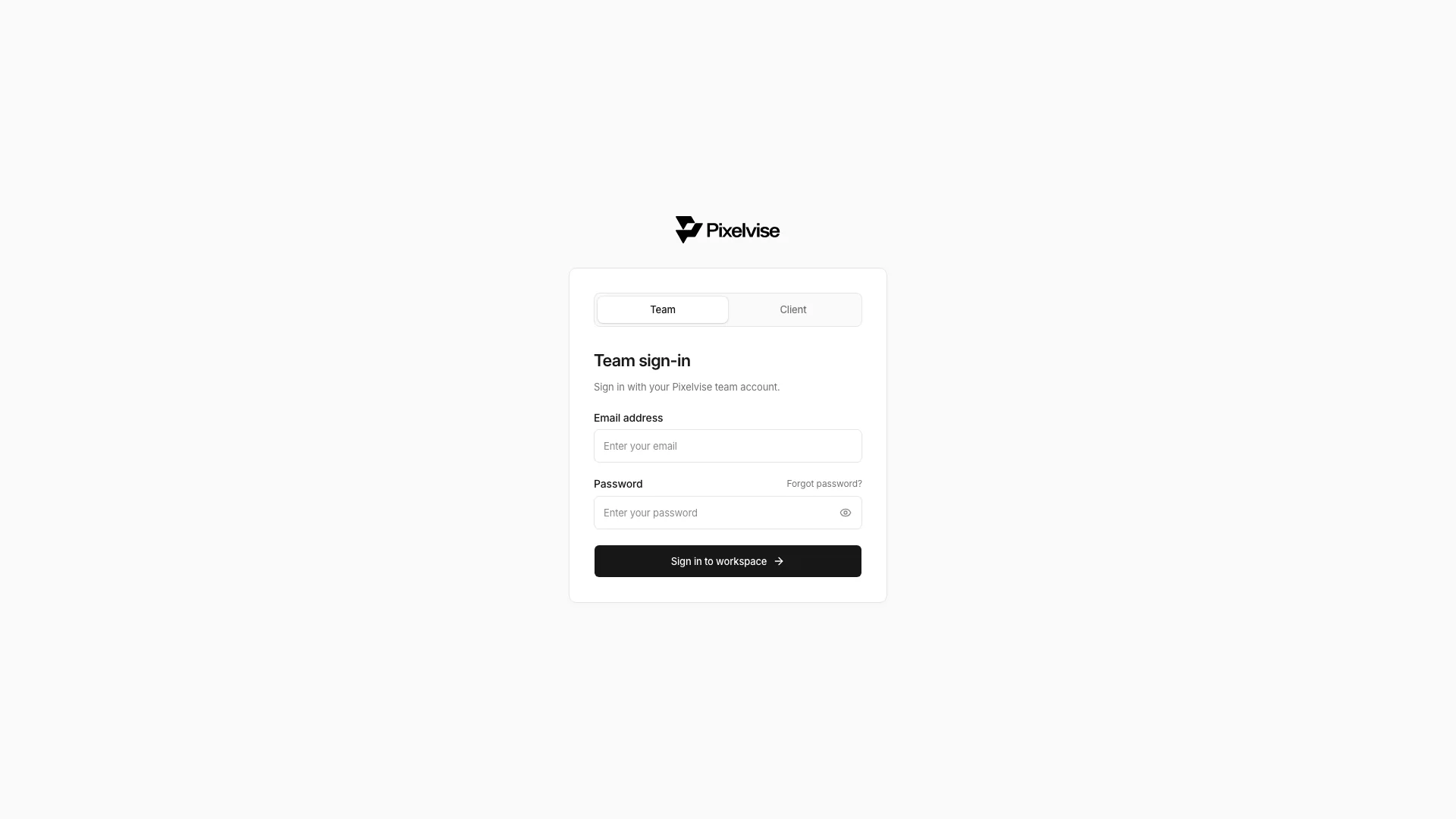
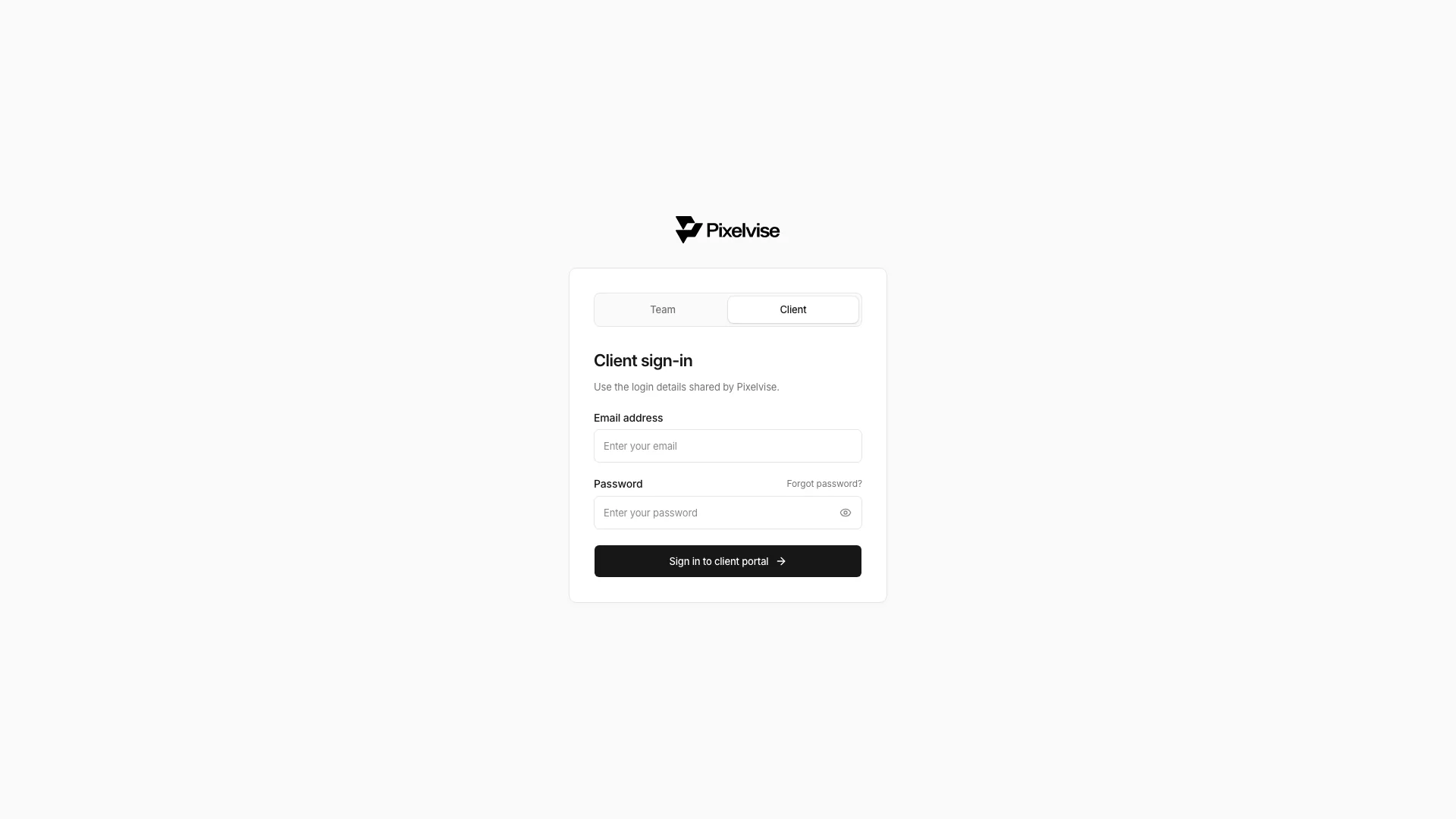
Because it holds real business records, the only screens shown here are its sign-in pages.
Tech stack
- Application. Next.js 16 (App Router), React 19 and TypeScript with server actions for the core operations, Tailwind CSS 4 and Radix UI, and Zod 4 for validation.
- Data. PostgreSQL through Prisma 7 with the pg driver adapter.
- Auth. NextAuth v5 with explicit team and client entry points that are each checked only against their own identity type.
- Documents. TipTap 3 rich-text editors for proposals and contracts, Puppeteer to render PDFs, S3-compatible storage for uploads, and Sharp for images.
- Interface. dnd-kit for the project board, Framer Motion for transitions and a monochrome look using Pixelvise’s own assets.
A workspace model
All business activity is scoped to a workspace. Membership has roles (owner, admin, member, viewer), and every domain record carries the workspace it belongs to: clients, proposals, contracts, invoices and projects with tasks. Staff provision new members from workspace settings; there is no public sign-up, no plan upsell and no marketing on the sign-in screens.
Documents that look finished
- Service library. A catalogue of 42 services, each with a proposal and an unsigned agreement. Fees, quantities, service limits and legal variations are explicit review fields, so nothing commercial is invented by the software.
- Invoices. Preview and PDF share one document builder with sender, logo and signature snapshots, and PDF assets are embedded or loaded only from approved storage.
- Provisioning. A script that defaults to a read-only plan and needs an explicit apply flag, preserves existing passwords and documents, inserts only missing templates with stable IDs and never lowers invoice numbering.
AI that is off by default
Generation is gated by one workspace setting that is off by default, and all calls go through a single resolver. Provider models are loaded from the provider before it can be enabled, API keys are encrypted with the application secret and redacted from anything sent to the browser.
Run on a small server
Production runs as its own service on a Linux virtual machine behind Cloudflare, with Nginx, systemd, PostgreSQL and persistent uploads outside the release folder, with resource ceilings so it can share the machine with another application. A test suite runs the private-access rules without a database.
Our Role at Pixelvise
Pixelvise handled the work end to end:
- Product and data model
- Full-stack build in Next.js and Prisma
- Document, PDF and invoice engine
- Deployment and resource limits on a shared server