Overview
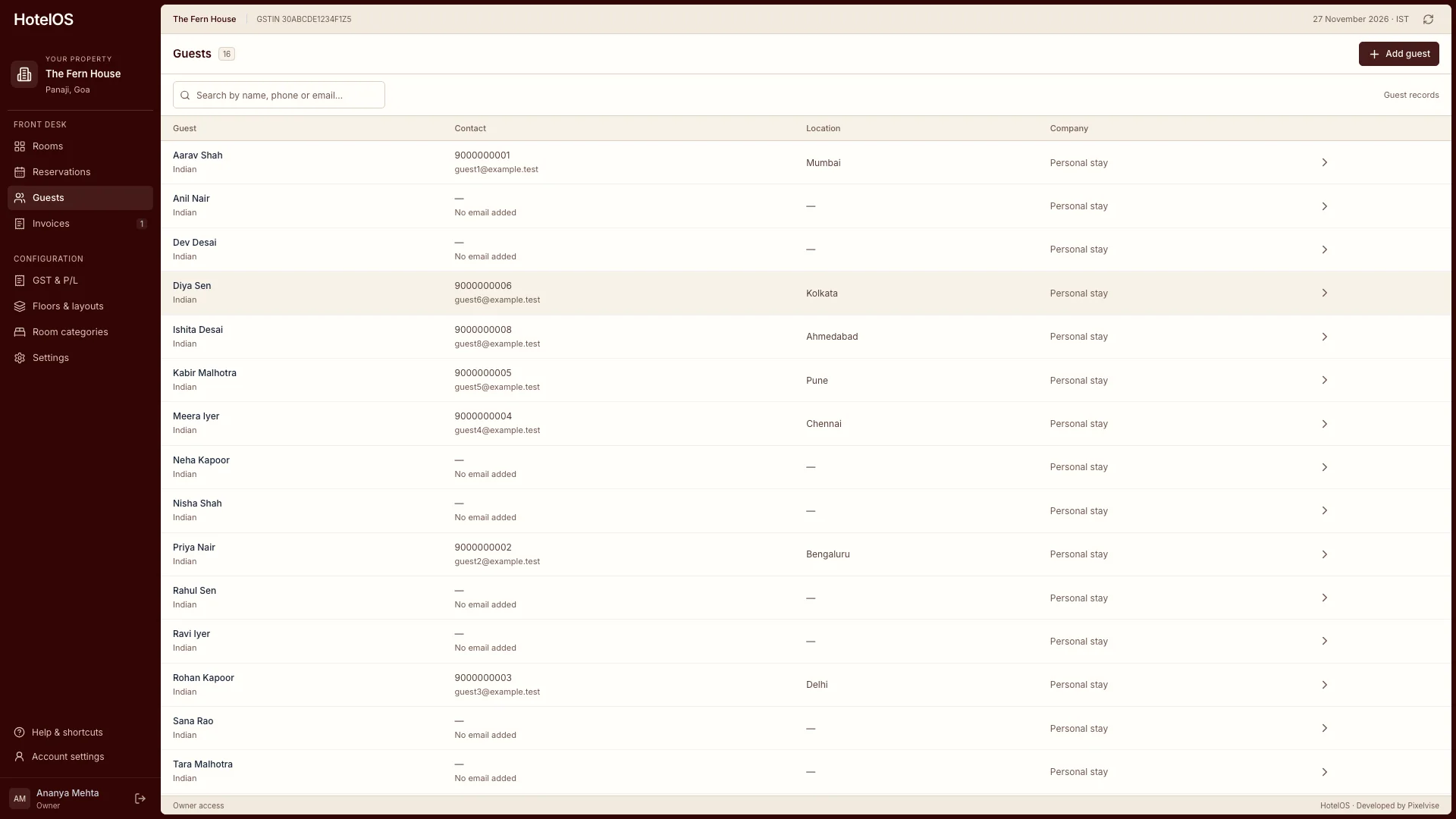
HotelOS is software for running a hotel’s front desk. It is deliberately plain and fast: business software for people who check guests in all day, not a hospitality dashboard.
We designed and built it, from the room board to the invoice PDF and the installer that puts it on a client’s hosting.
Tech stack
- Back end. Laravel 12 on PHP 8.2 with session authentication, CSRF protection and a versioned JSON API under
/api/v1. MySQL is the production target; SQLite is used for the demo and the tests. - Front end. React 19 and TypeScript built with Vite 6, with screens loaded on demand, self-hosted Inter and handwritten CSS.
- Documents. Invoices are rendered to PDF with Dompdf, with the supplier logo re-encoded to PNG and versioned so old invoices keep the logo they were issued with.
- Tests. PHPUnit on an in-memory database, and Playwright end-to-end tests that run the real workflows on an isolated server and assert that no screen has an internal scroll area.
A room board that replaces popups
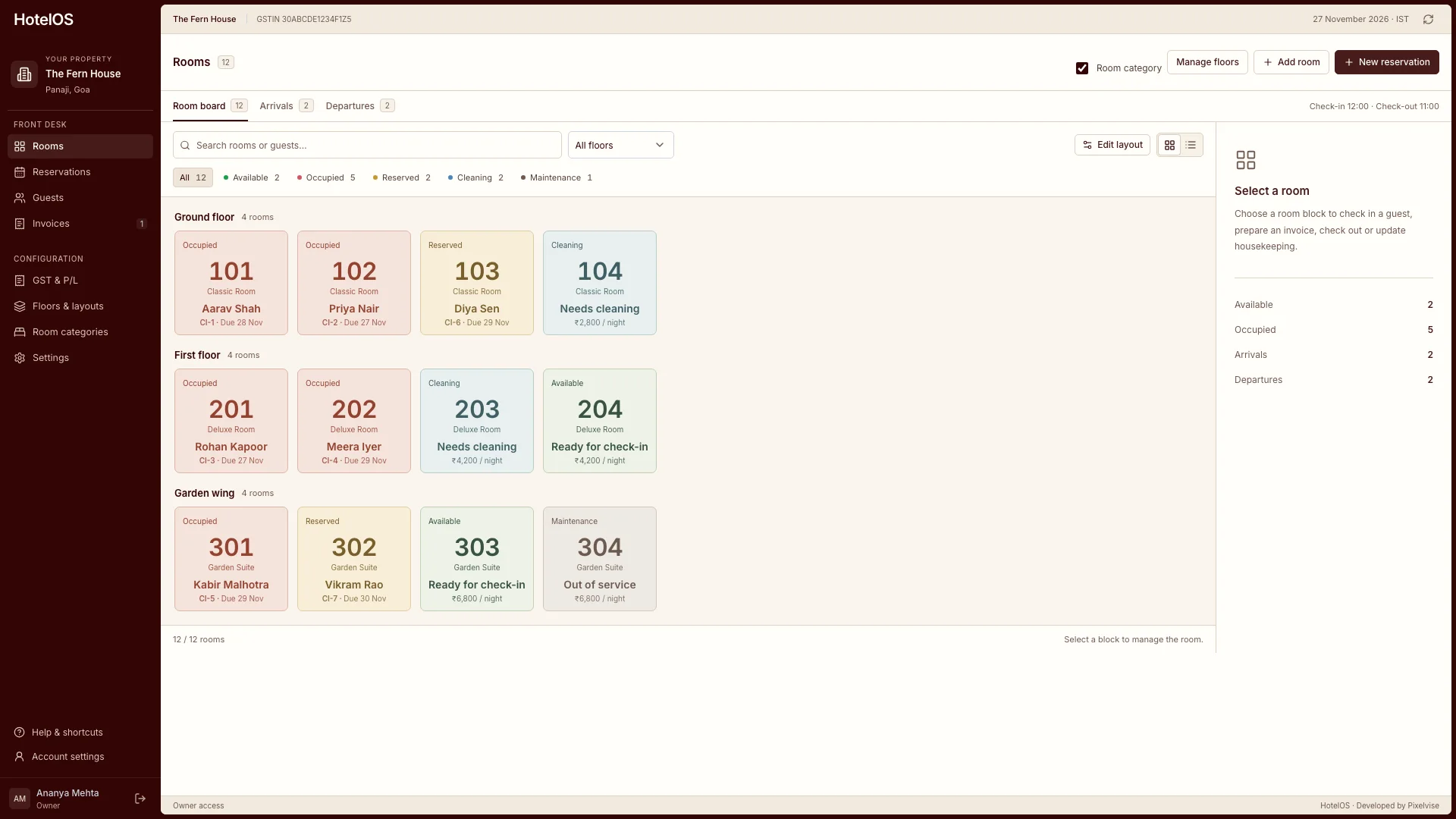
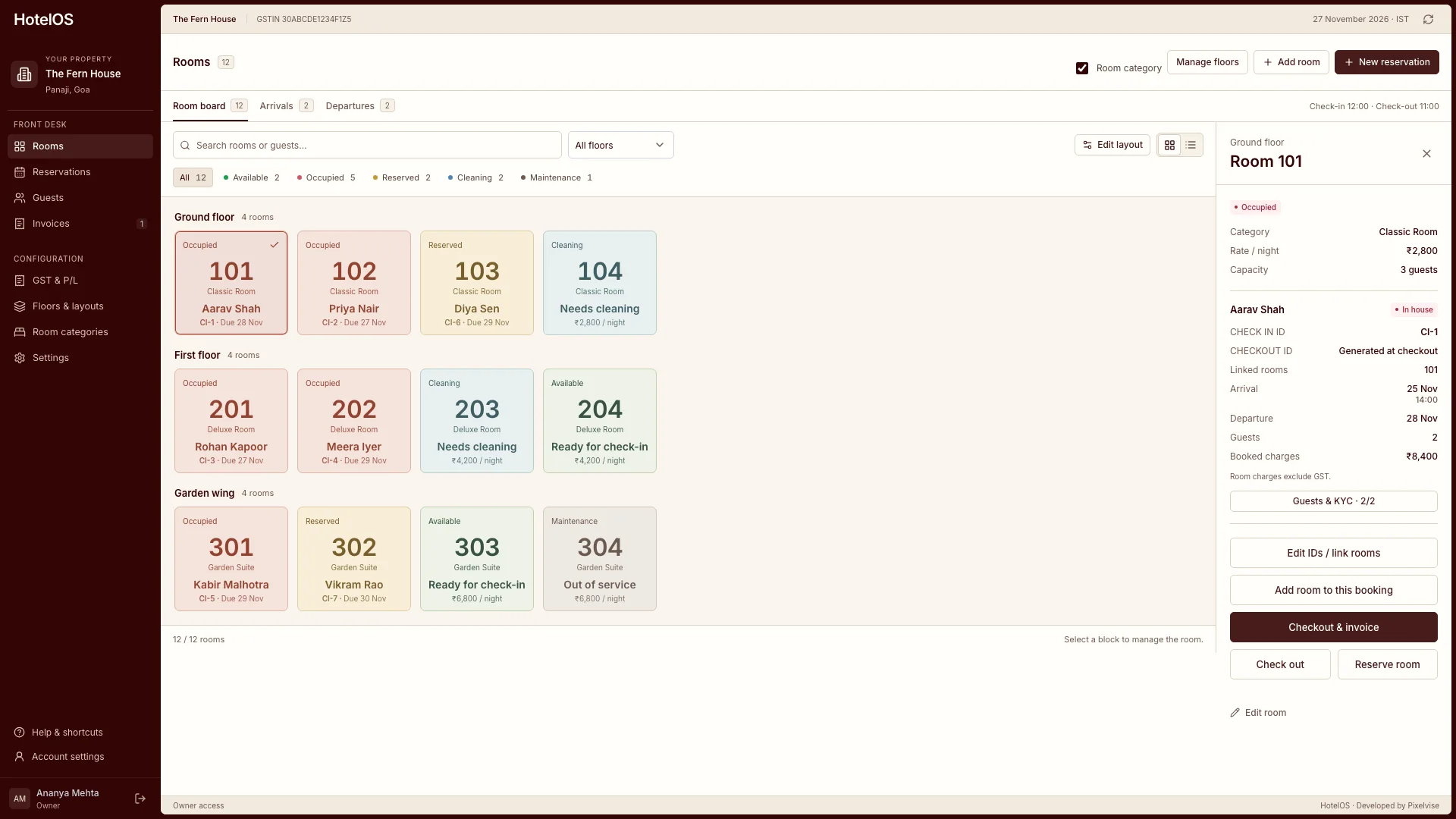
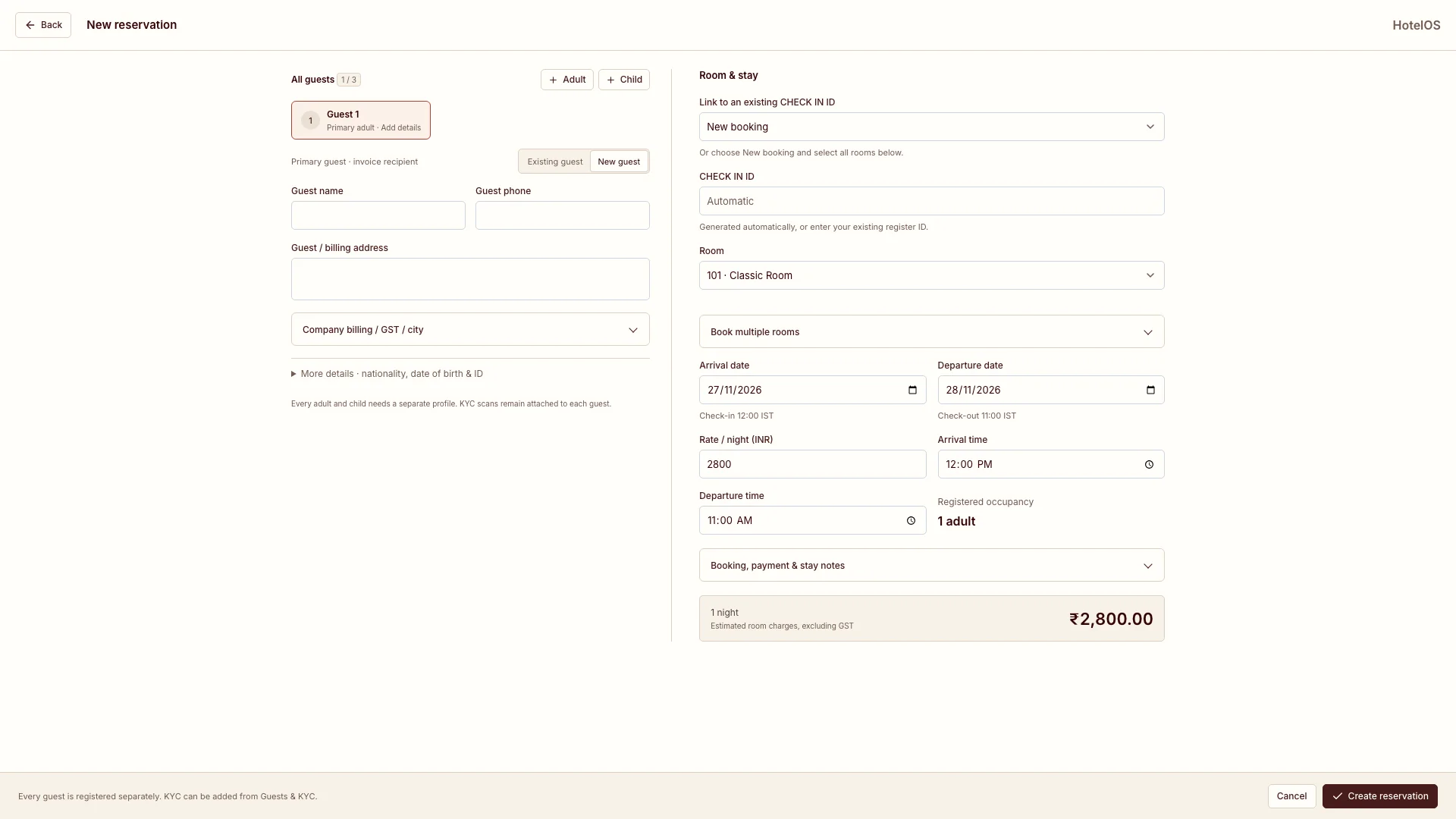
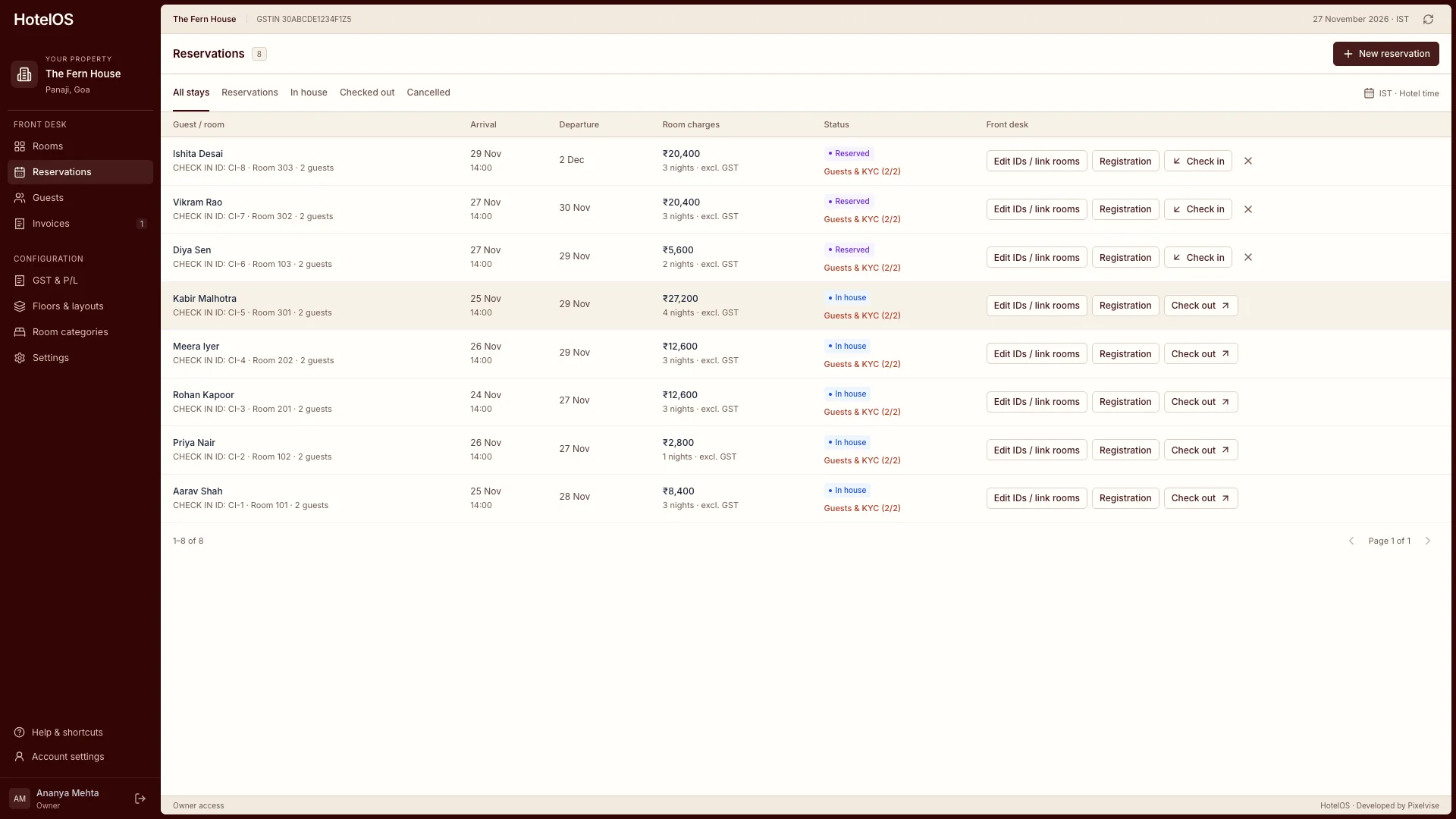
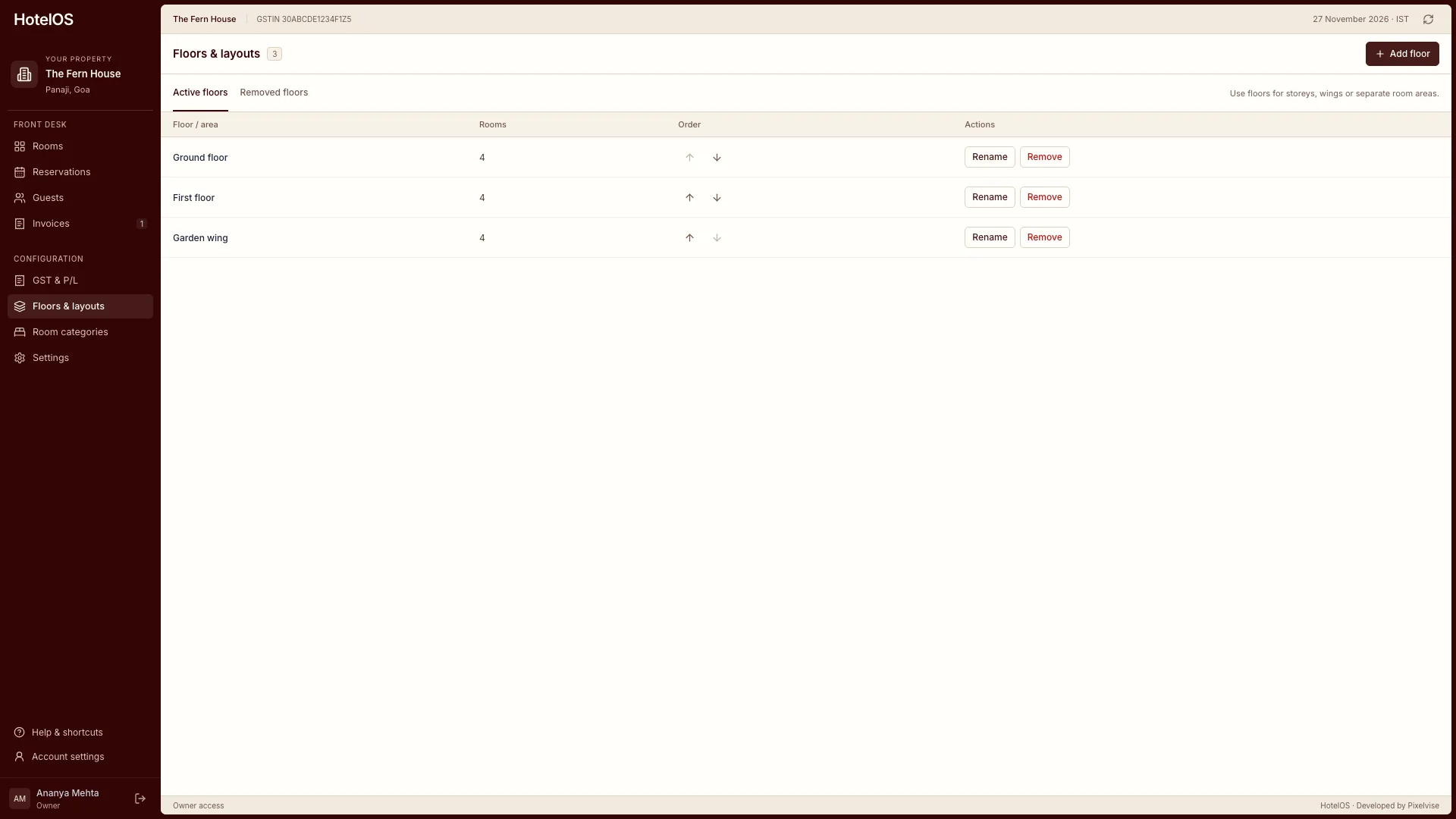
The room board uses colour-coded blocks for occupied, reserved, available, cleaning and maintenance, grouped by floor, with a persistent panel for the selected room. Check-in, invoicing, checkout and housekeeping are all reachable from that panel, and an invoice started from a room is pre-filled with its guest, stay and rate. Forms are full-page tasks, not stacked dialogs, and mobile invoice rows reflow into labelled controls.
Billing that can be trusted
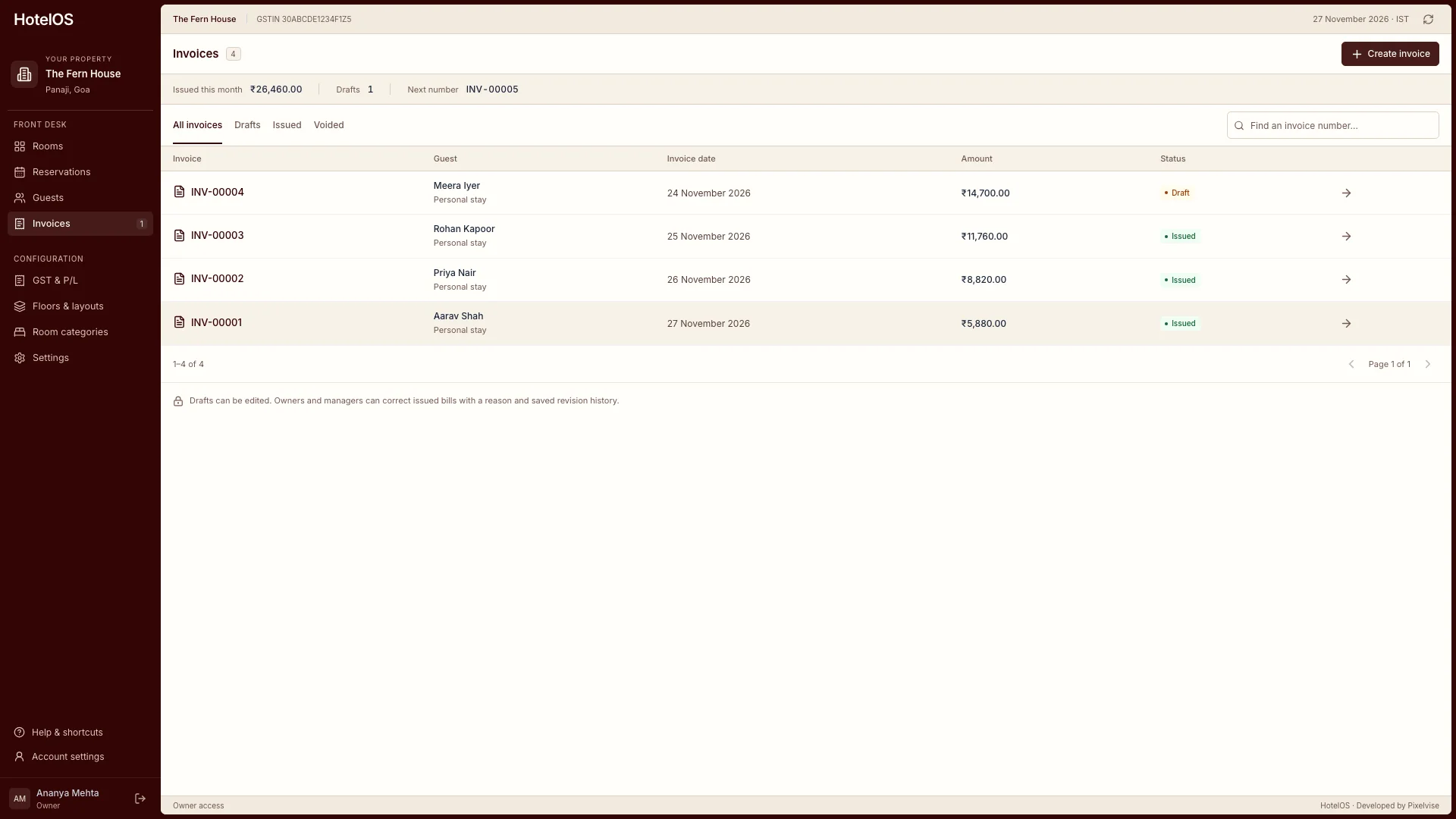
- Integer money. Every amount is stored as integer paise and totals are calculated on the server by one calculator. Client totals are never trusted.
- Concurrency. Reservations lock the room row before checking date overlaps, and invoice creation locks the hotel row, so two receptionists cannot double-book a room or take the same invoice number.
- Invoice numbering. Numbers are unique per hotel and financial year, limited to 16 characters, and changes to the sequence must name the number they expect to replace, so stale settings cannot overwrite a newer counter.
- Corrections. Owners and managers can correct an issued bill through a dedicated route that needs a reason and the revision it is correcting. The original is archived, the status and supplier snapshot are kept, and the change is audited.
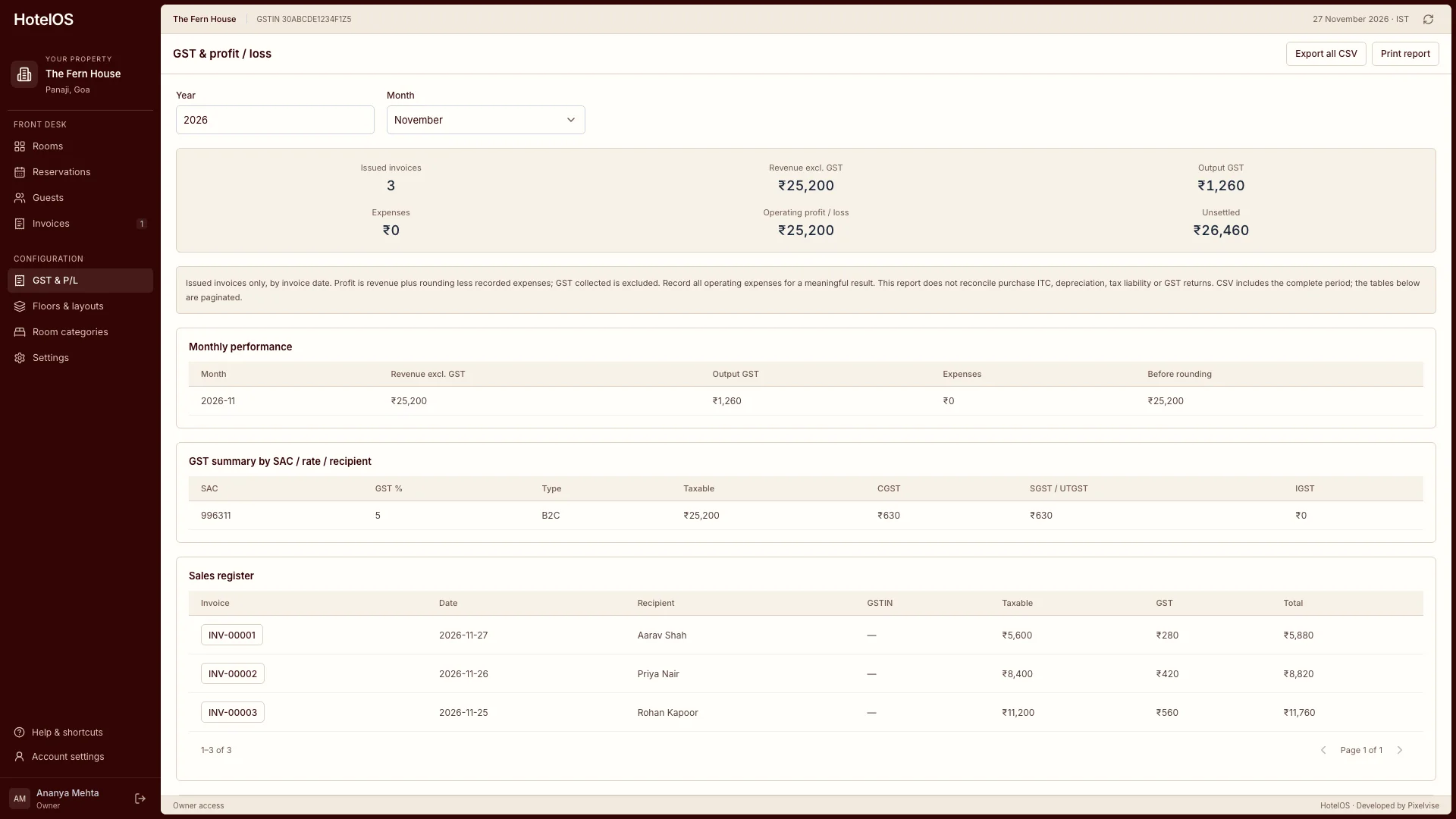
- GST. Domestic hotel accommodation with CGST and SGST based on the property’s place of supply, tariff dates calculated in Asia/Kolkata, daily rates and discounts validated per night. It is invoicing software, not a GST filing service.
- Reports. Sales and output GST by month and an operating profit and loss from recorded expenses, with CSV exports that escape spreadsheet formulas.
Guest records and security
- KYC documents. Uploads are encrypted with the application key, stored in a private folder that is never publicly linked, downloaded only by active staff of the same hotel, and every download is logged. Aadhaar is limited to the last four digits.
- Tenancy. Every hotel-scoped query goes through one tenant layer that also checks account status, licence status and expiry, and role. Platform admins cannot read guest records.
- Rate limits. Separate named limiters for general API traffic, sign-in, uploads, document downloads, PDFs and password changes.
Shipped for shared hosting
A release script builds a flat ZIP that unpacks into an empty folder on Apache or LiteSpeed hosting, with all private code and data in a protected folder. A browser installer detects its URL, accepts the database details and creates the hotel and its owner account, and a read-only preflight command checks production prerequisites without printing secrets.
Our Role at Pixelvise
Pixelvise handled the work end to end:
- Interaction design around the selected-room workflow
- Laravel and React build, billing engine and GST invoicing
- Security model for guest documents and multiple hotels
- Installer, release packaging and test suites