Overview
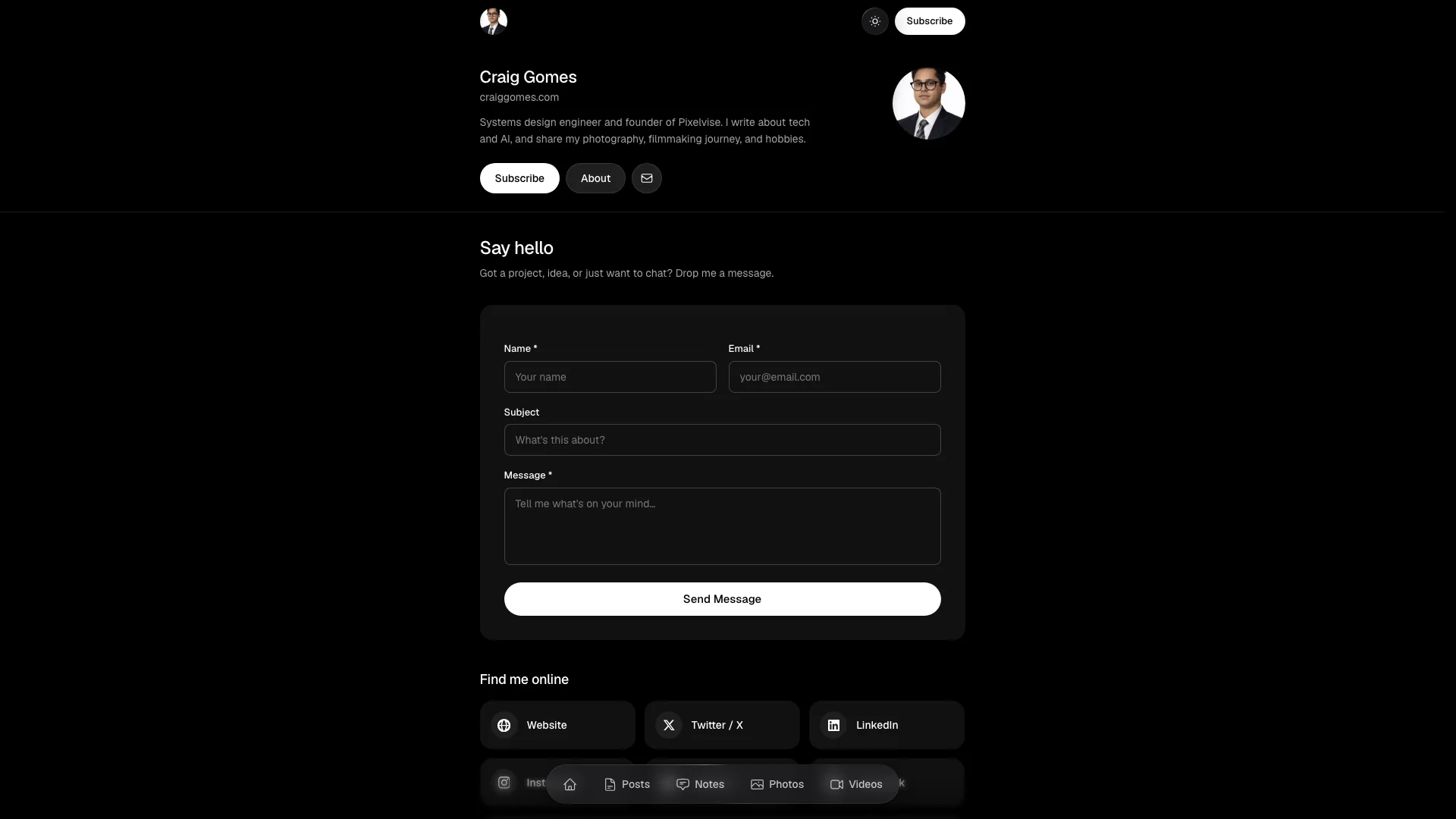
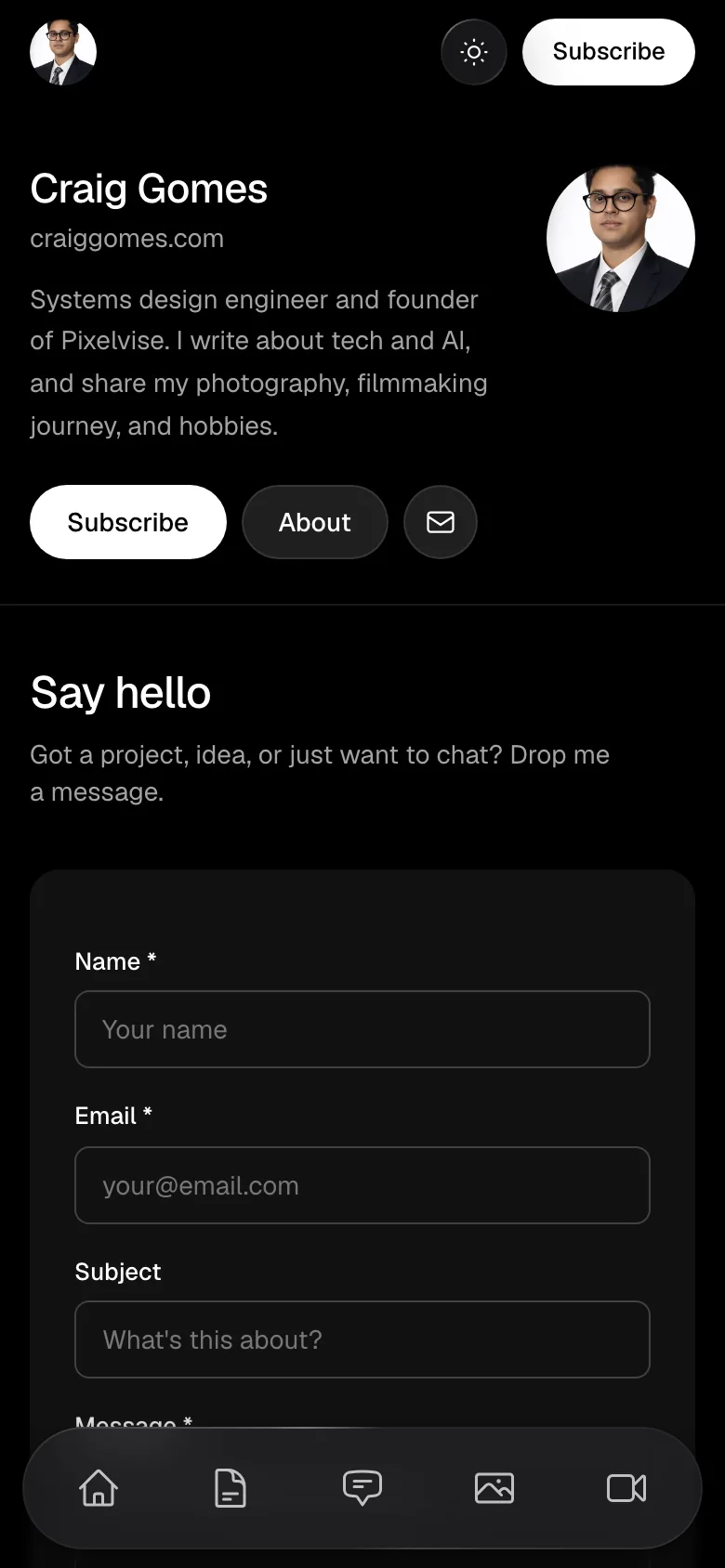
craiggomes.com is a personal publishing platform: essays, short notes, a photo library with albums, videos, books and a connect page, all run by one person from a phone or a laptop. The goal was ownership. If a social platform disappears, the writing, the photographs and the audience stay on a site that belongs to the author.
We built the public site, the WordPress back end it reads from, a web admin and two mobile apps, and kept the narrow single-column look the author already liked.
Tech stack
- Front end. Remix 2 with Vite and Tailwind CSS 3 on Cloudflare Pages, with Geist (self-hosted) as the only typeface. Dark is the default theme and a light theme is one toggle away.
- Content. Headless WordPress on its own subdomain. A site plugin adds notes, messages, albums, ordering, sharing and the manage endpoints, and a second plugin collects the analytics.
- Edge. Pages Functions fetch from WordPress and cache for 60 seconds at the edge, so nothing is baked in at build time and a new post is public within about a minute with no rebuild.
- Apps. A Flutter app for Android and iPhone using secure storage for the sign-in, a native share channel on Android, and the free Apple signing route on iPhone.
A blog that still feels like a blog
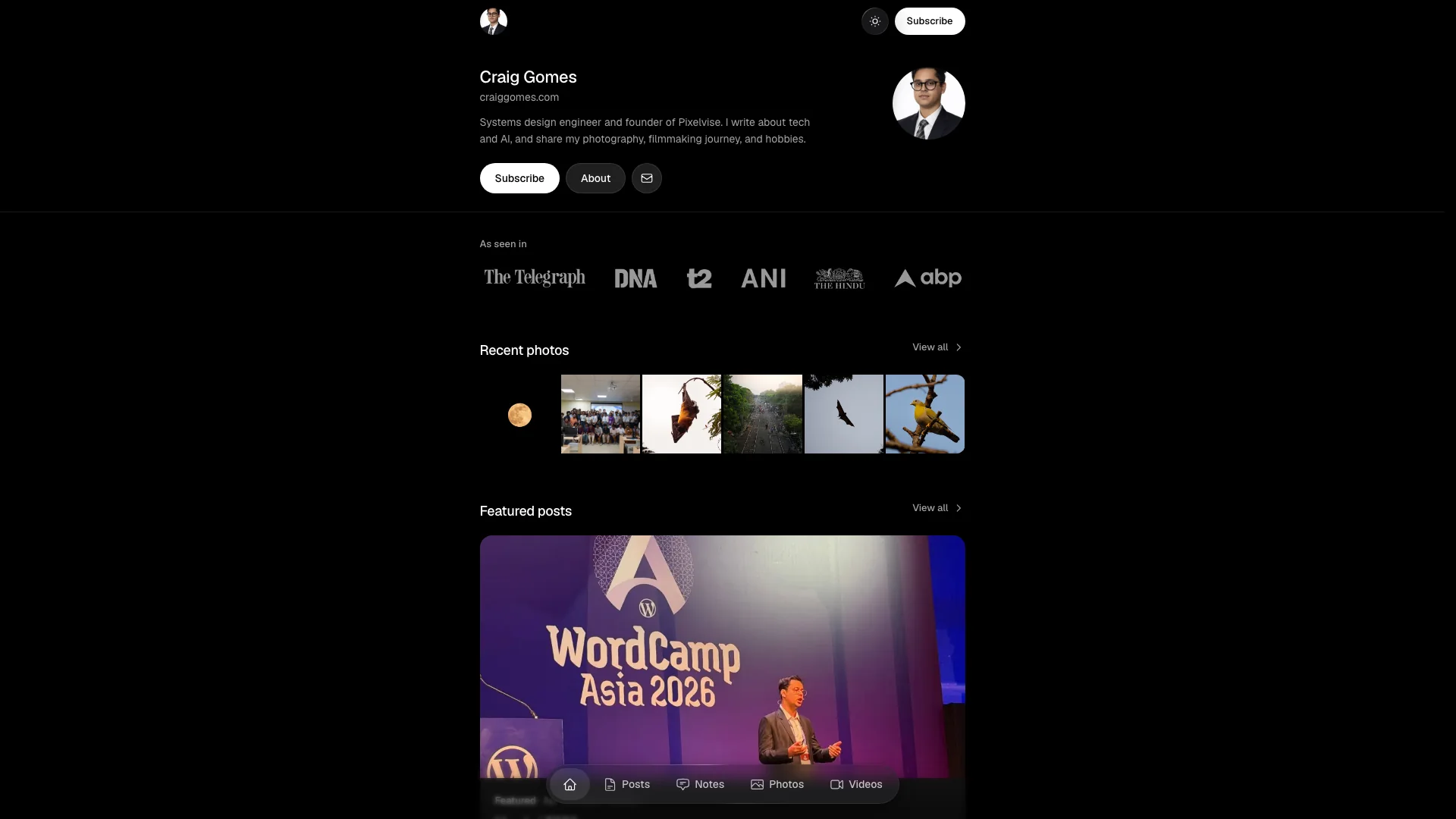
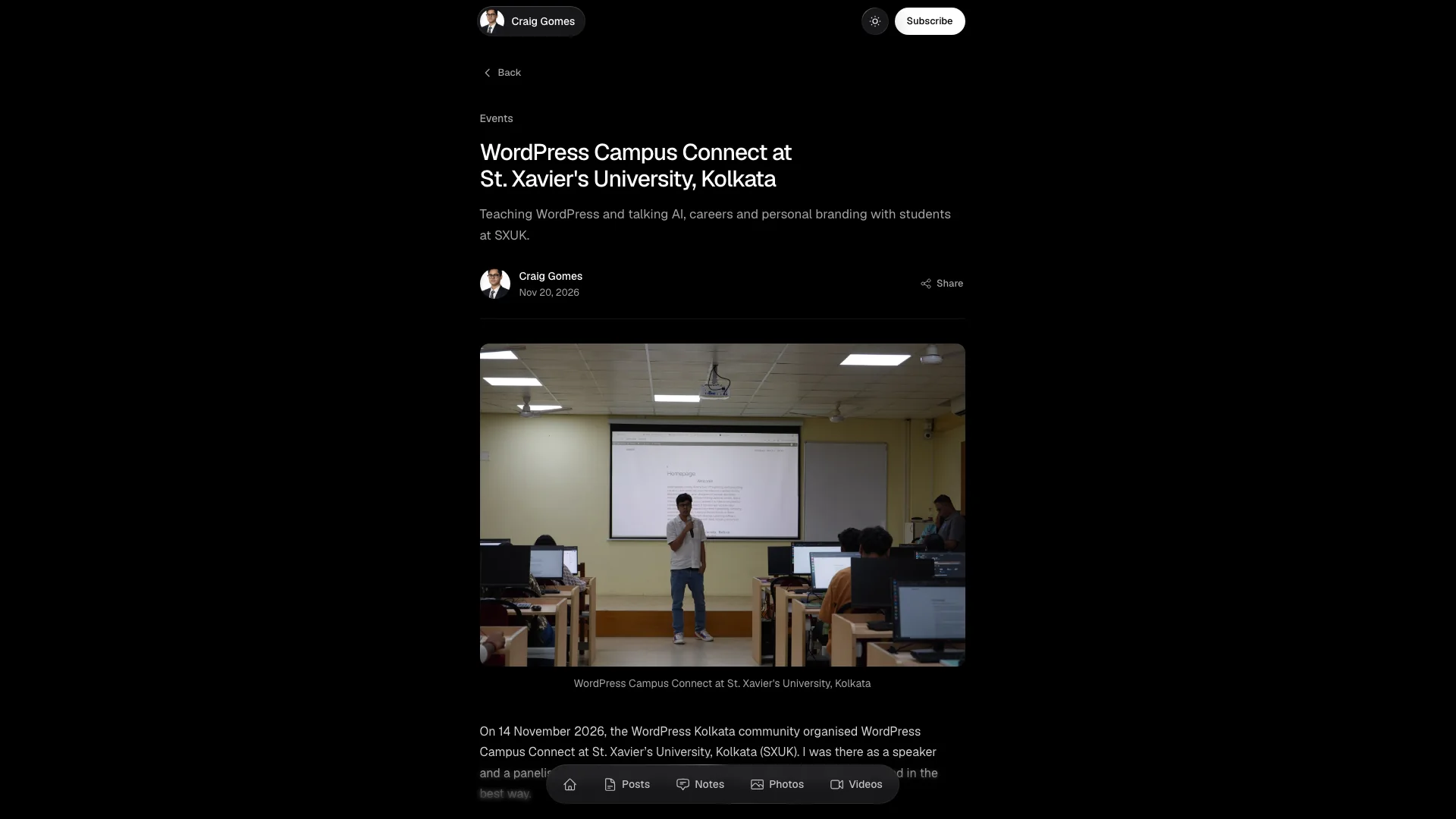
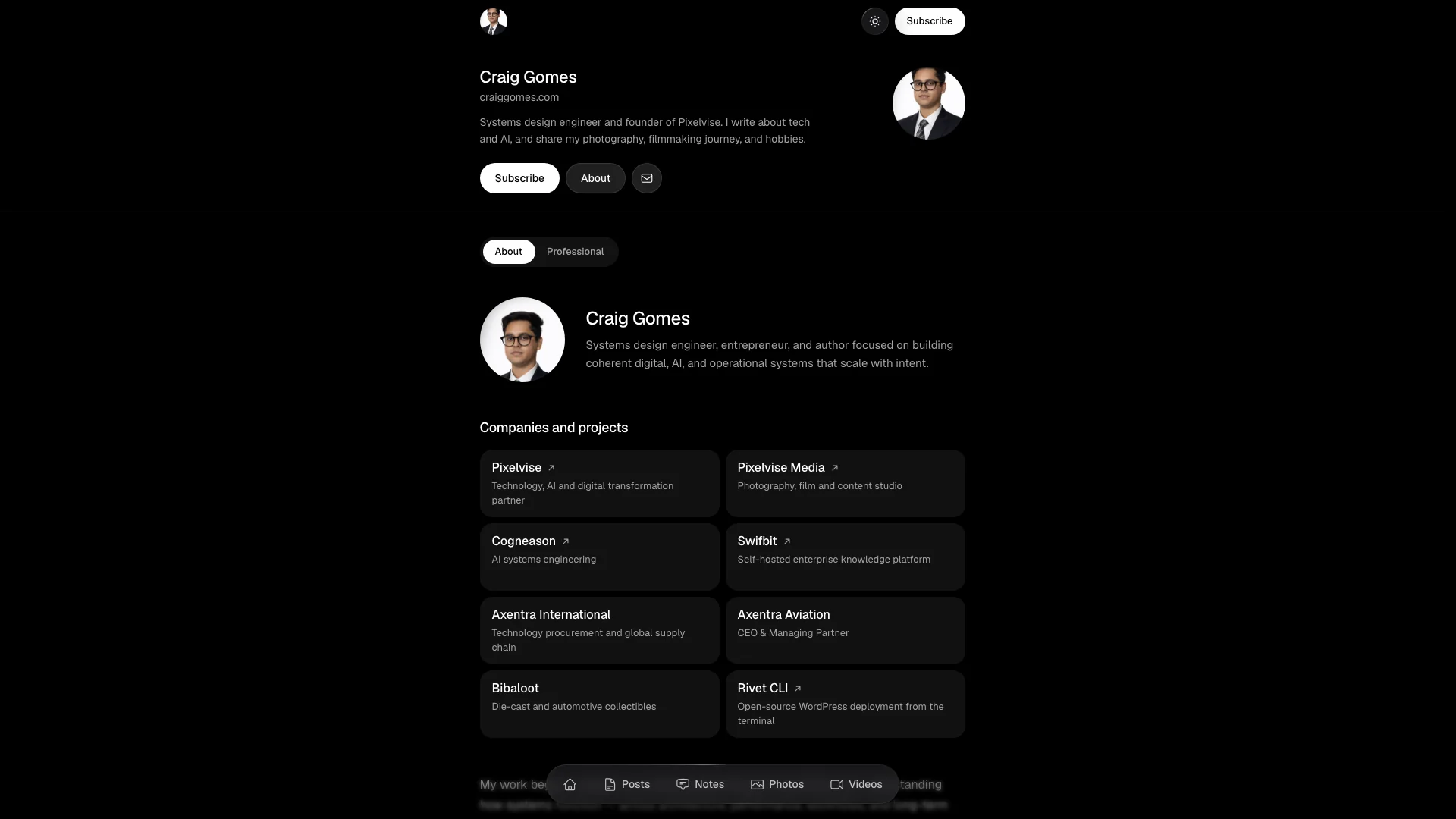
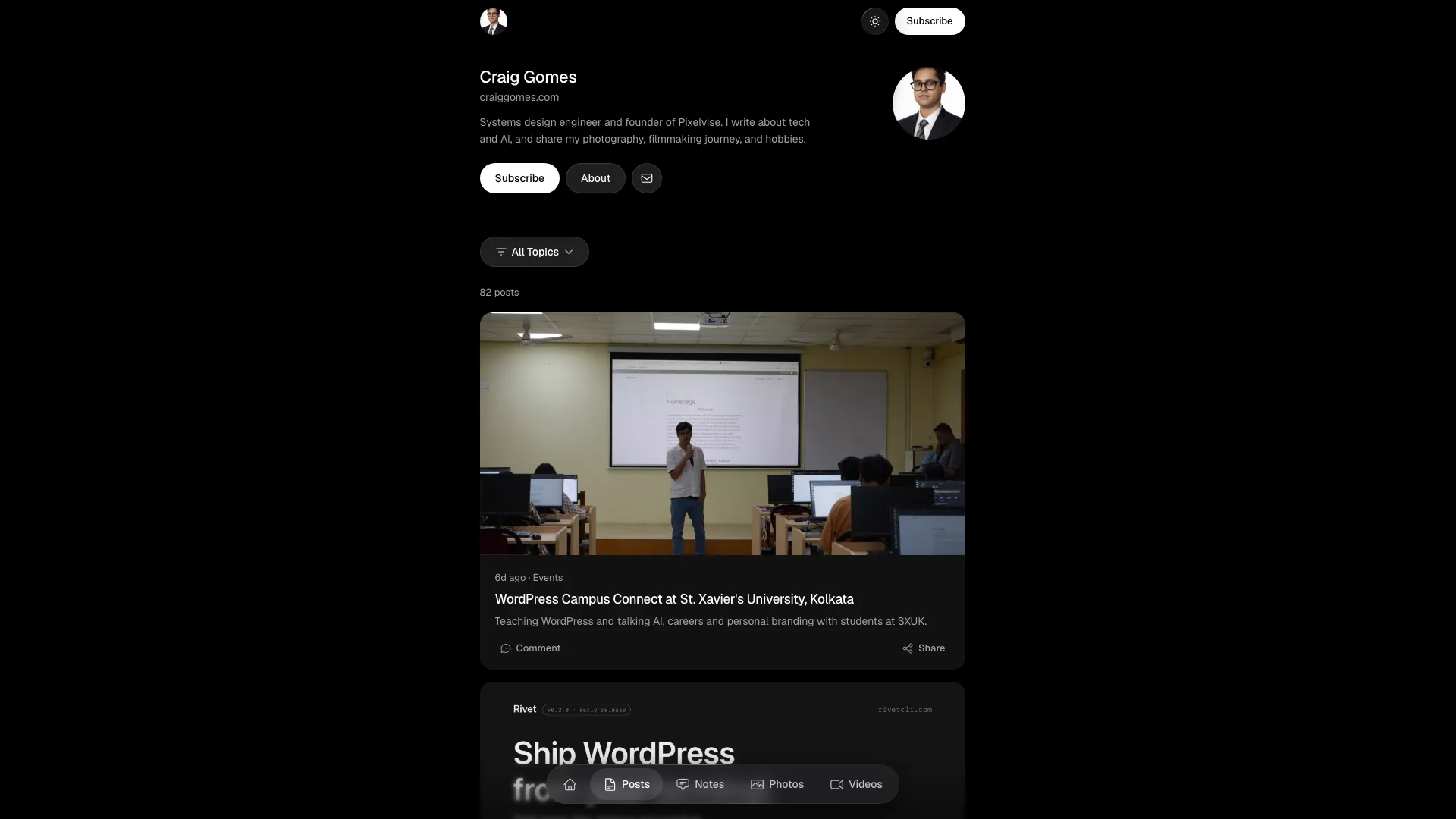
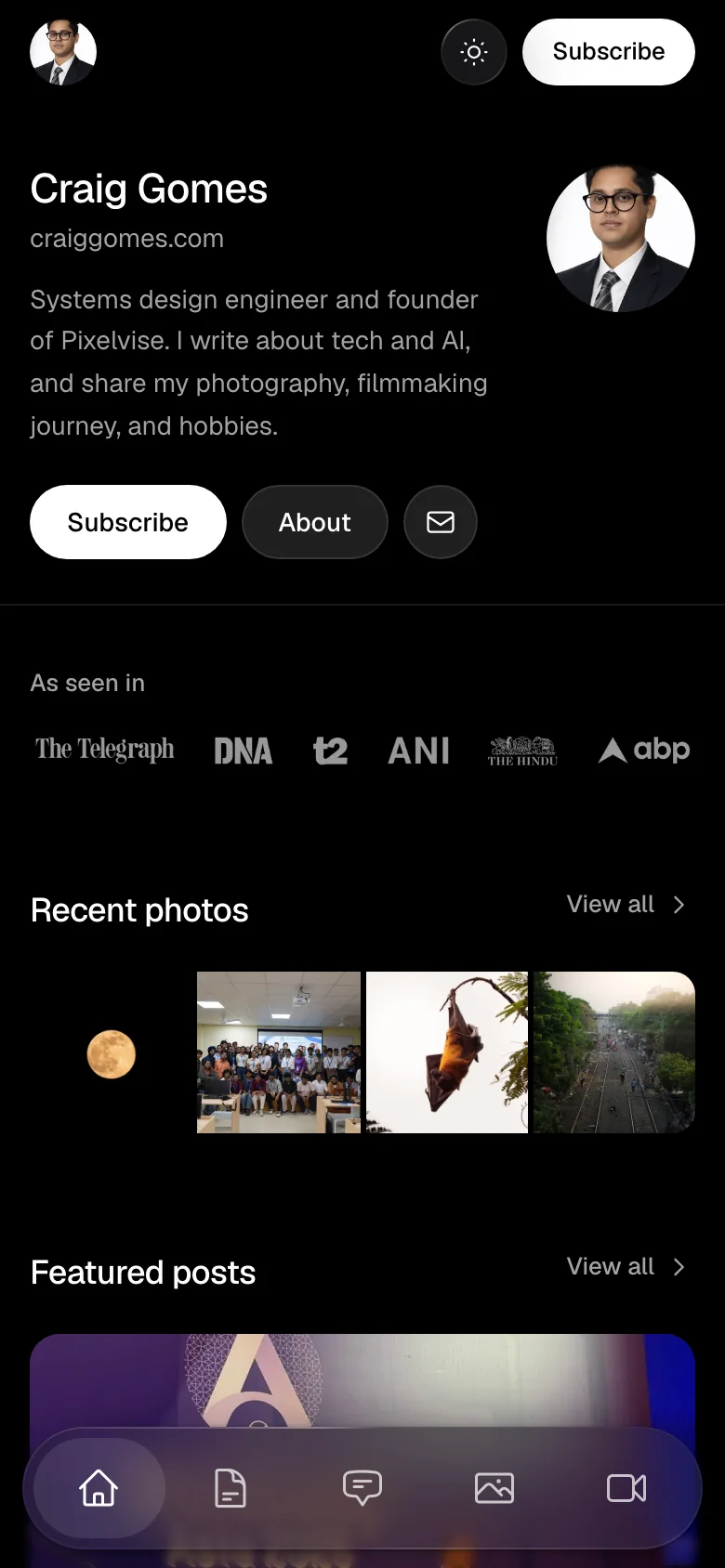
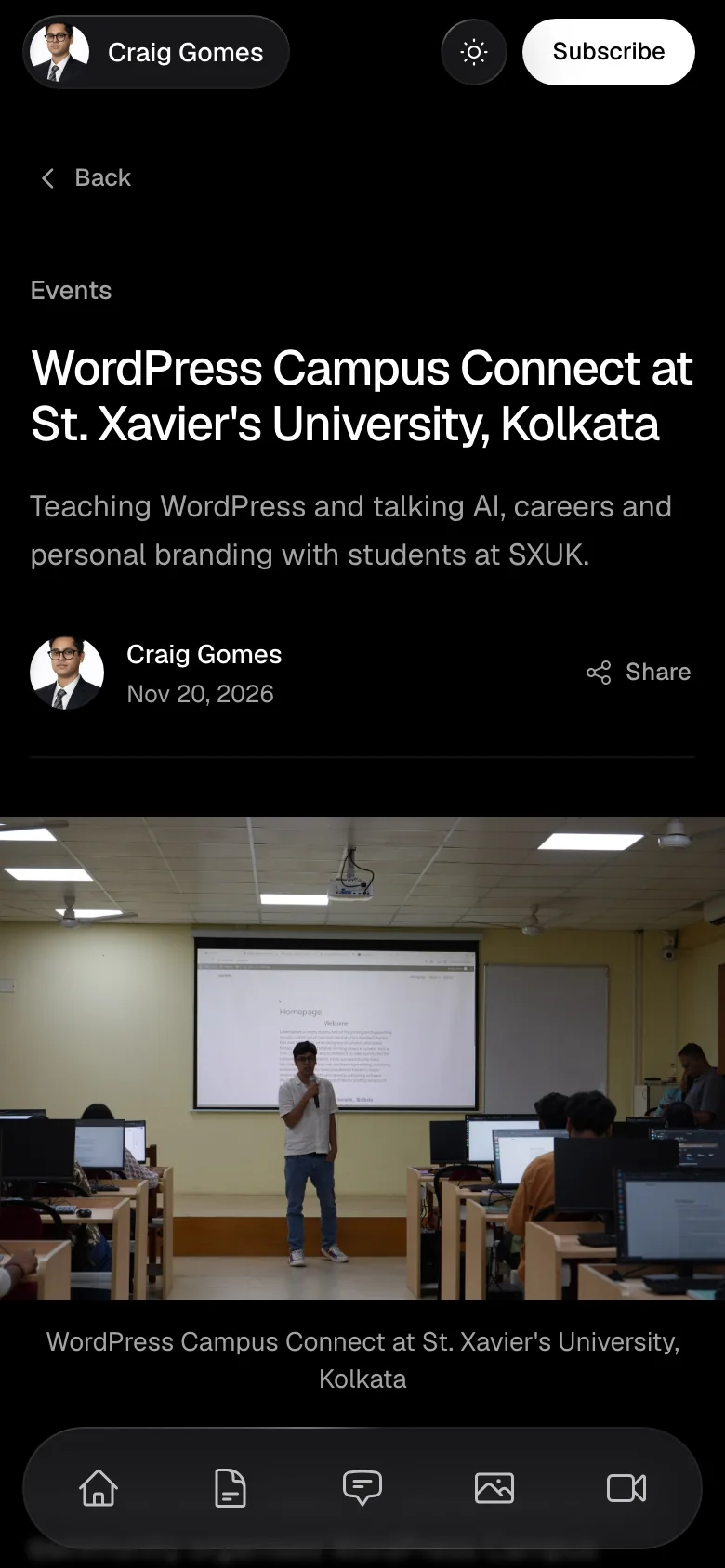
The layout is deliberately narrow: a sticky top bar, a profile header with Home, Posts and Books tabs, then post cards with a featured image. Type is small and quiet, article body is 16 px, and weight and colour carry the hierarchy. Only the layer that floats above the content, such as the phone tab bar, sheets and the photo viewer’s controls, uses a glass effect. Content stays flat.
- Home. Posts marked to stick to the top come first as Featured, then the latest. The newest is an image card and the next four are compact rows.
- Images that do not blink. No skeleton pulses and no fade-ins. A grey slot holds the space and the image appears. Lists are awaited on the server, not streamed, so nothing swaps under the reader’s finger.
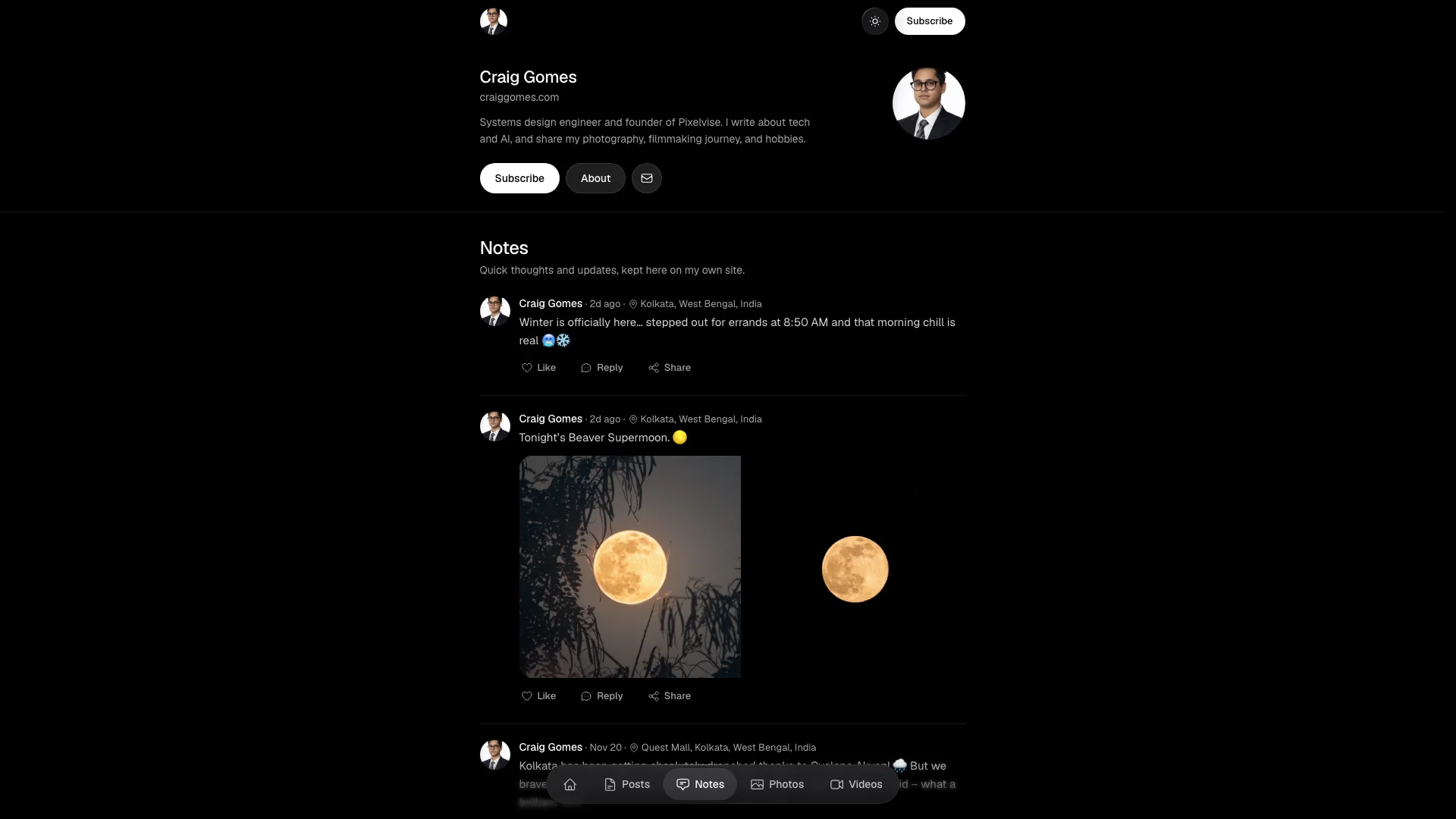
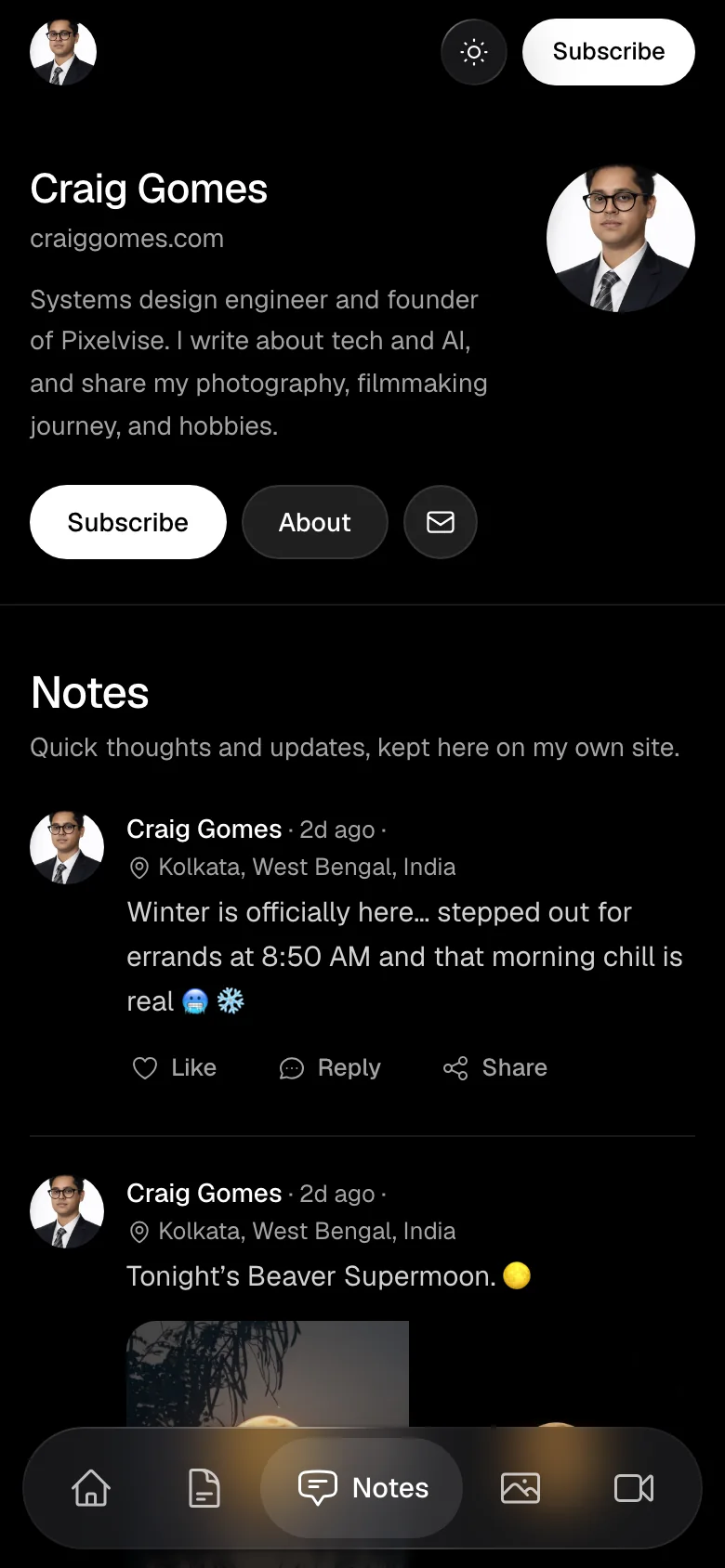
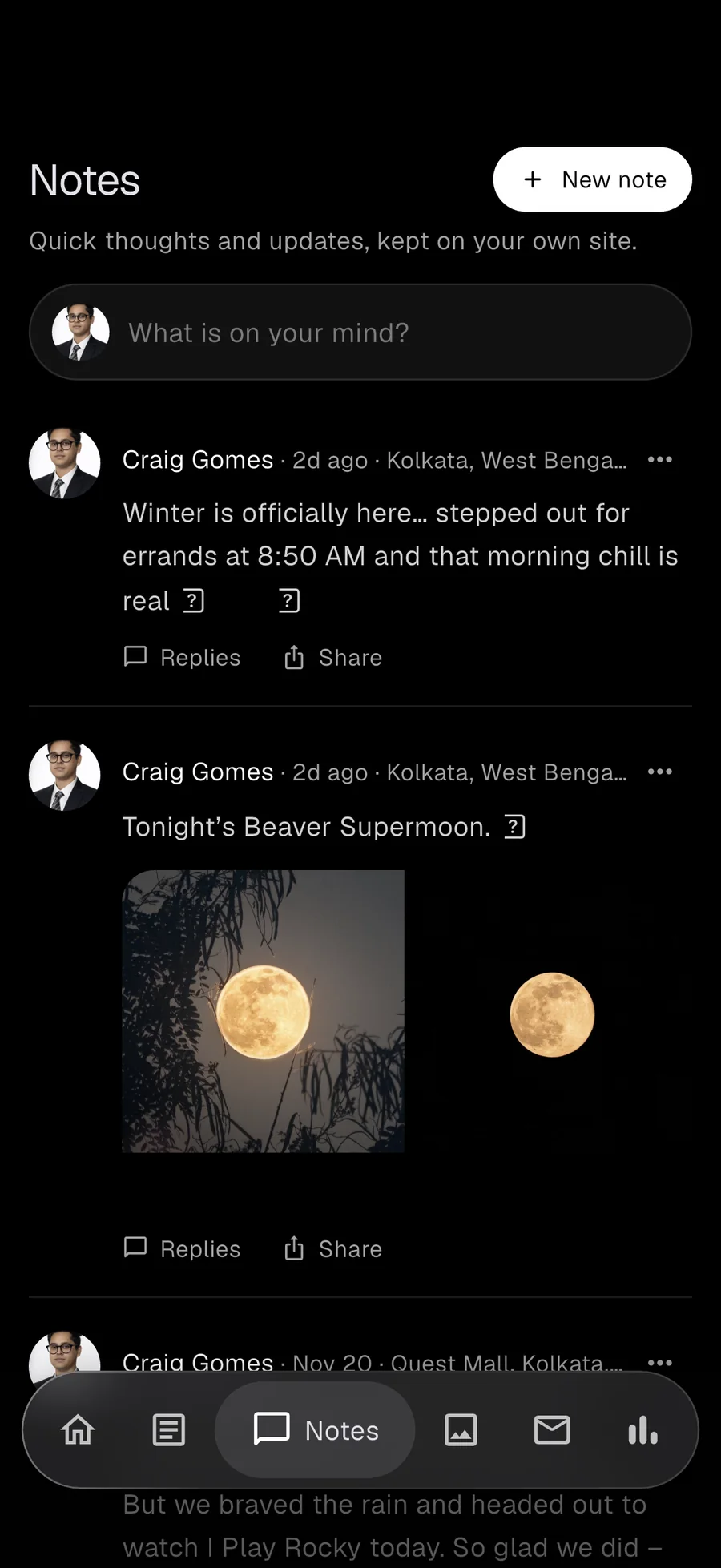
- Notes. Short updates with up to several photos and a place suggested from OpenStreetMap, each with its own page, likes, replies and share card.
A photo library like a phone’s
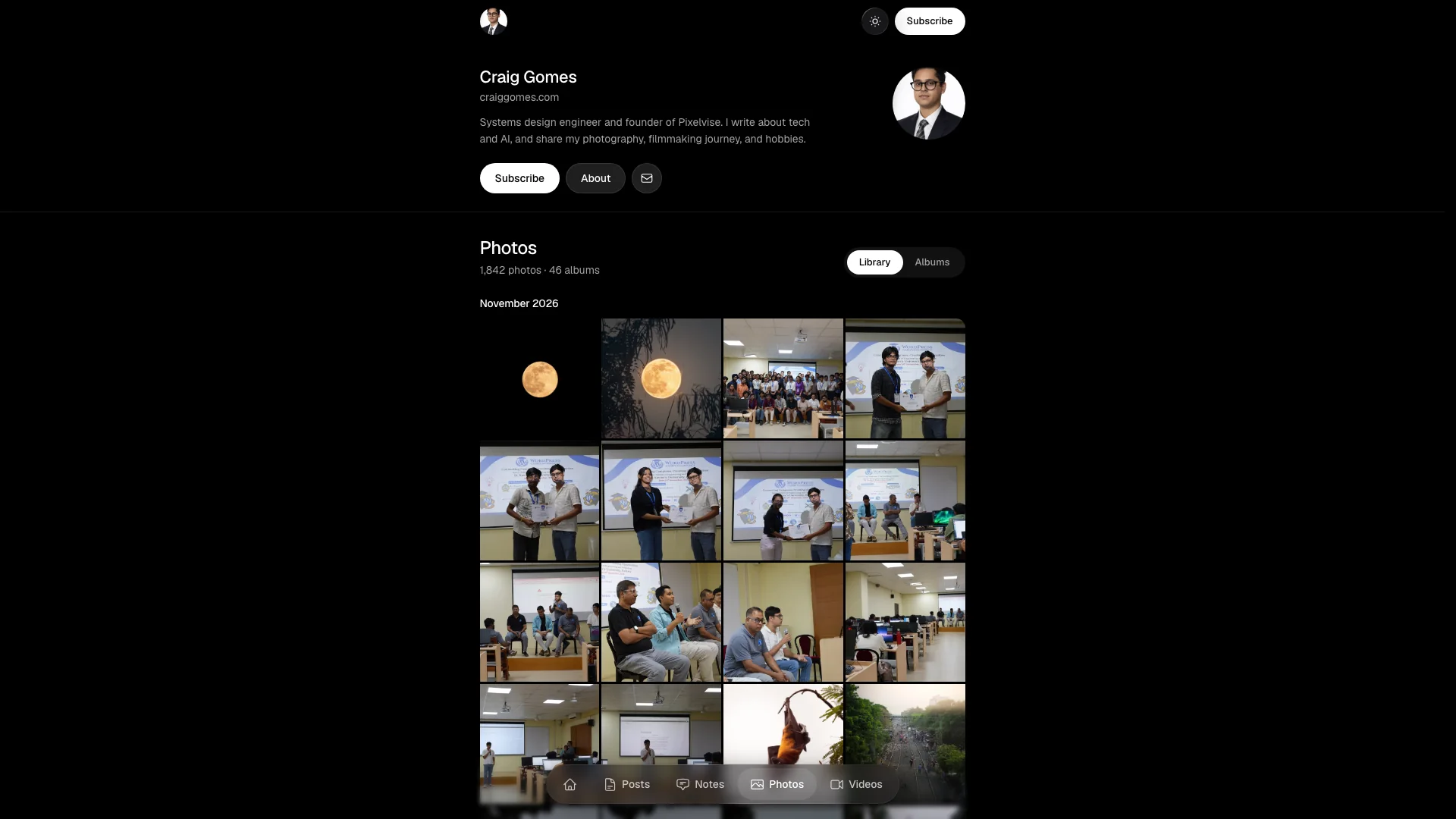
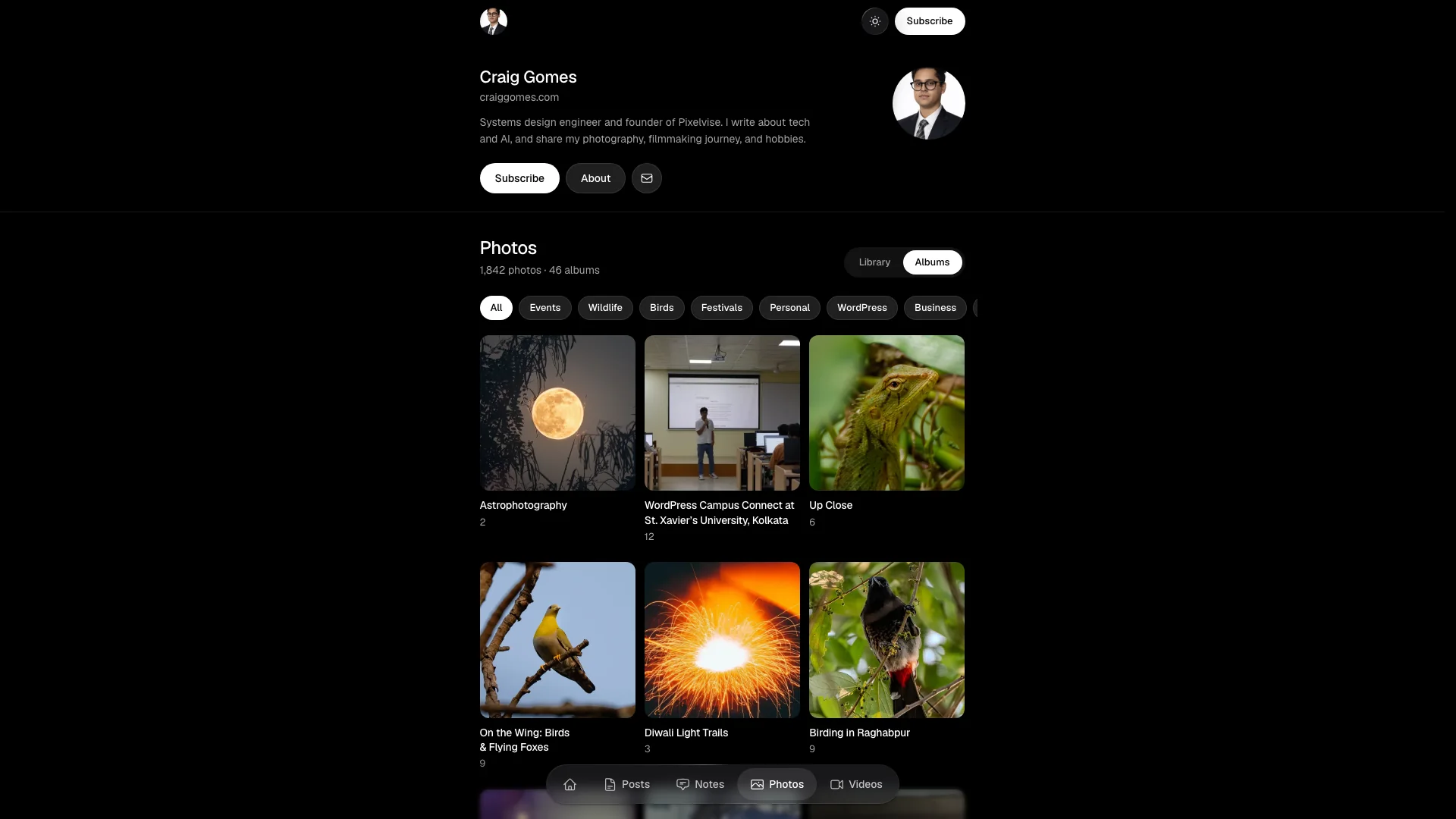
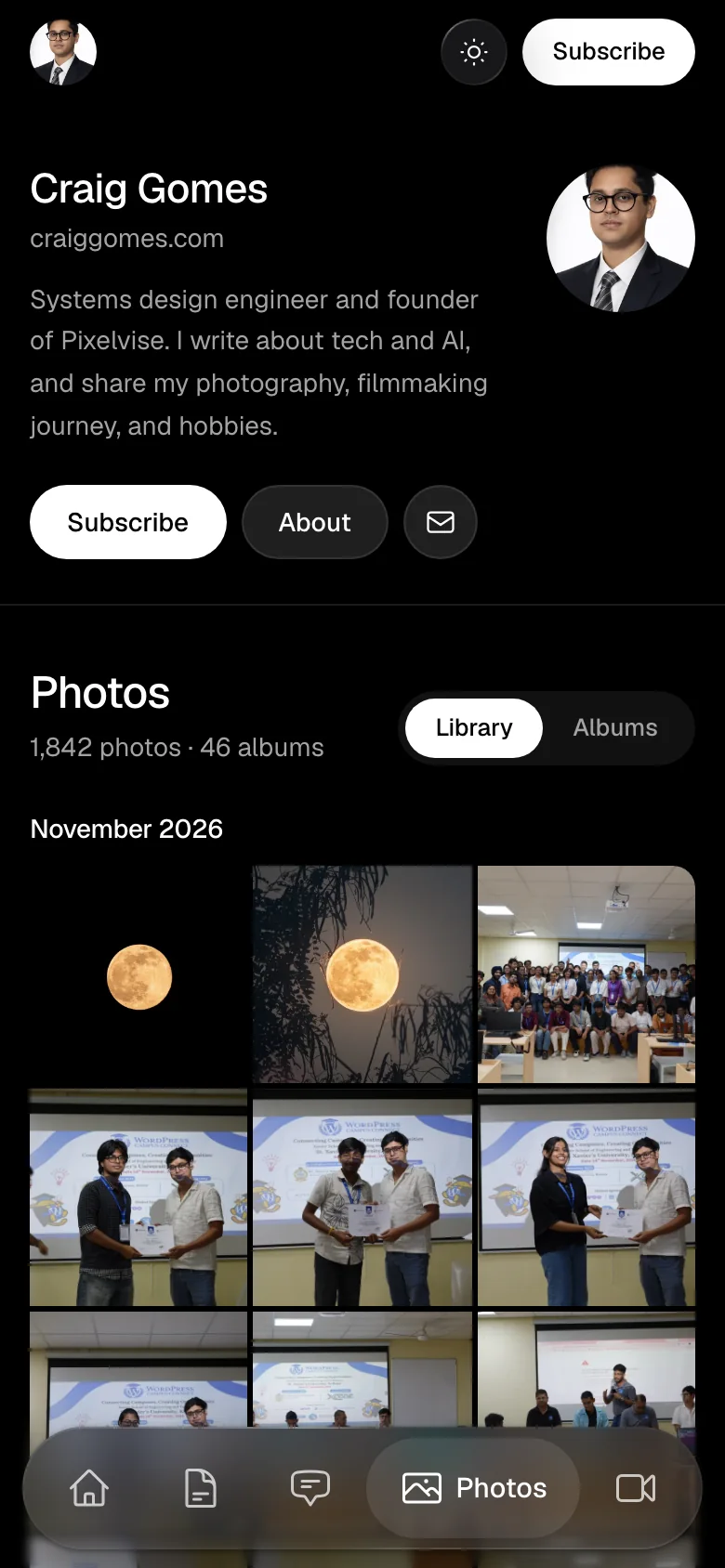
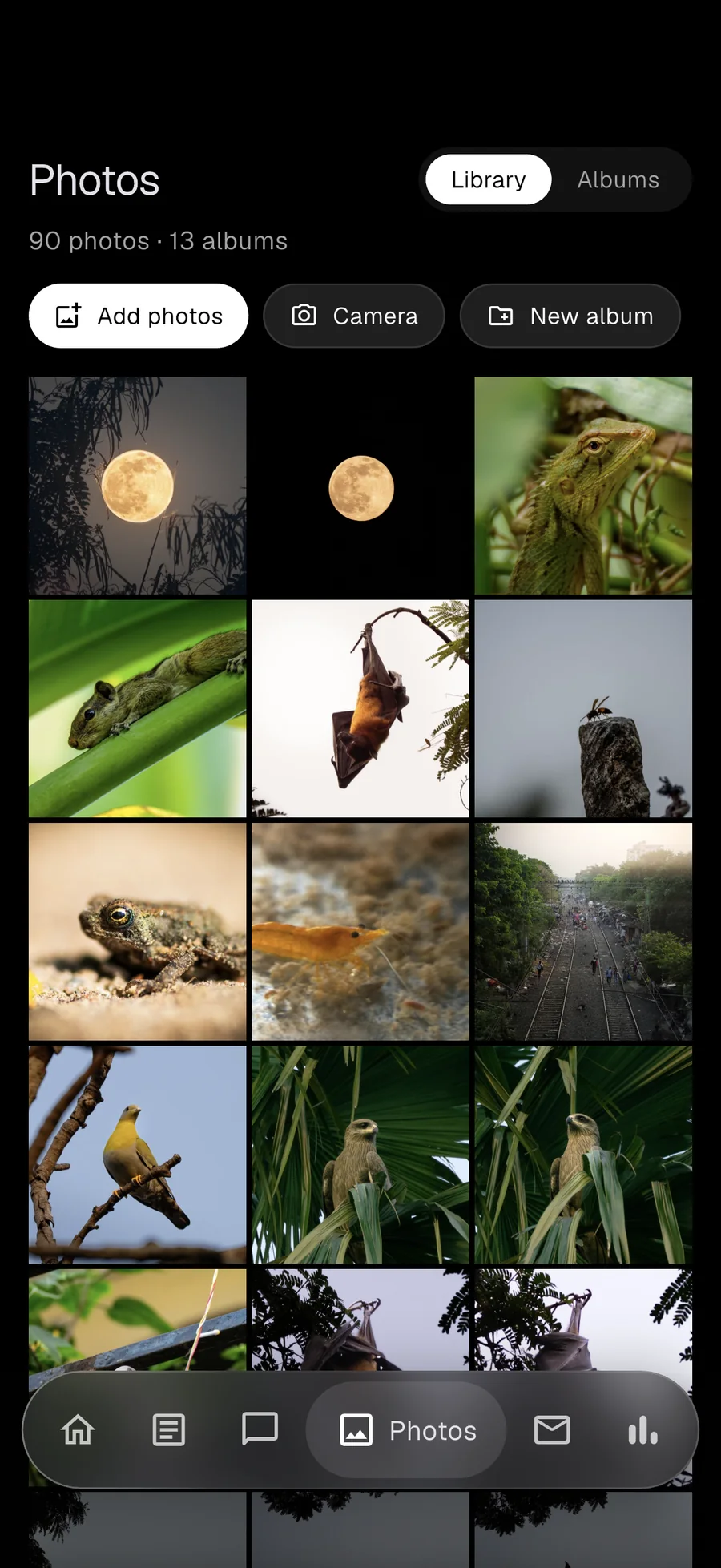
Photos is a library, not a list of posts. The library view is a tight grid of every photo under month headings, and the albums view shows square covers with a count. Each photo has its own page with share, previous and next, comments, and a request for a print or licence that opens the contact form pre-filled with the photo’s link. A photo added on its own is an album of one, listed in the library but not under albums.
Sharing and share cards
Share opens a short list of places: Copy link, WhatsApp, Instagram, Facebook, X, LinkedIn and Image. Each place offers the link, or the page as a picture in that place’s shape (story, status or post), drawn in the browser on a canvas in dark or light. The same card is drawn in Dart in the app, and the two are kept in step. On Android a small native channel sends straight to Instagram or Facebook stories or any other installed app.
First-party analytics
A small plugin records reads, time and scroll, searches, shares, exits and returning commenters without third-party scripts, and the numbers appear in the web admin and in the app’s Insights tab, with each reader’s history and a way to forget them.
The apps
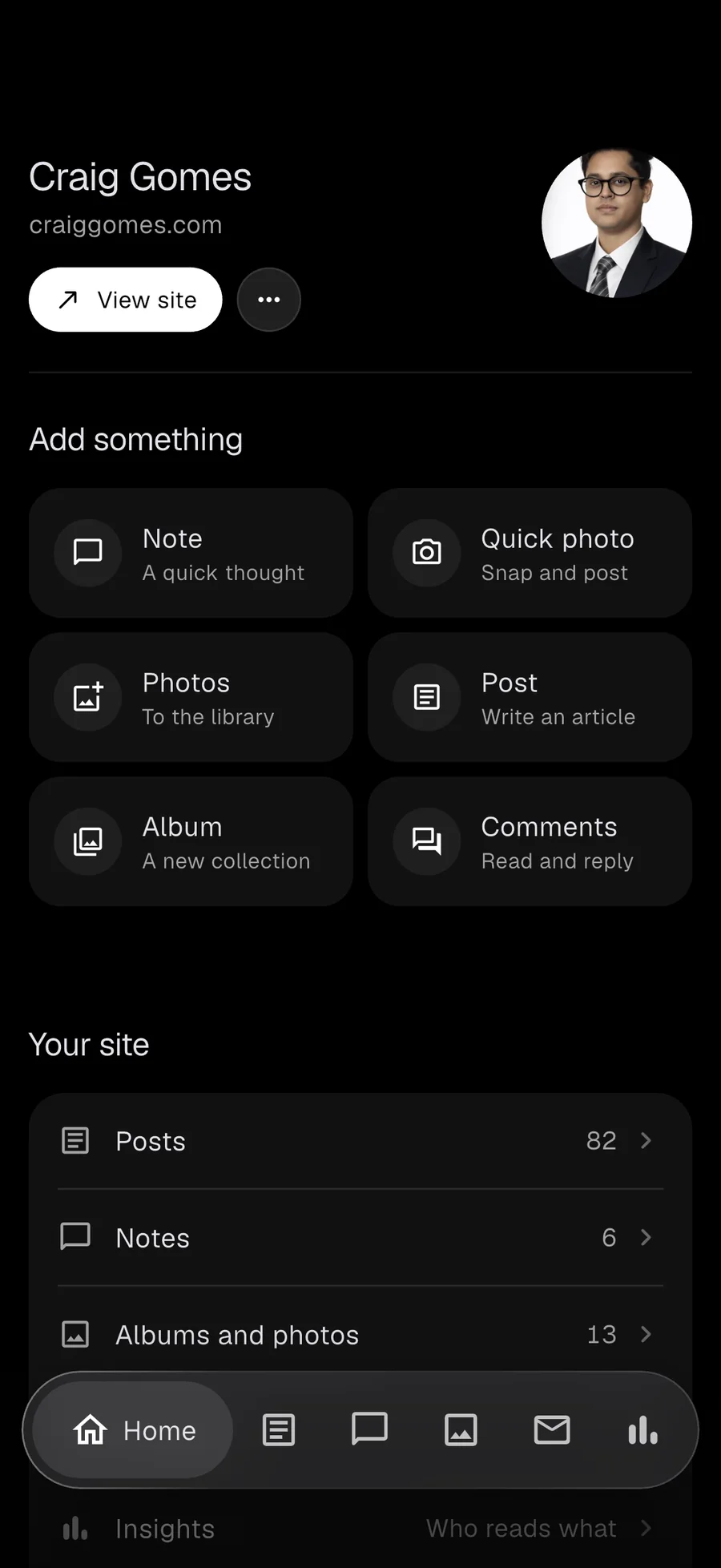
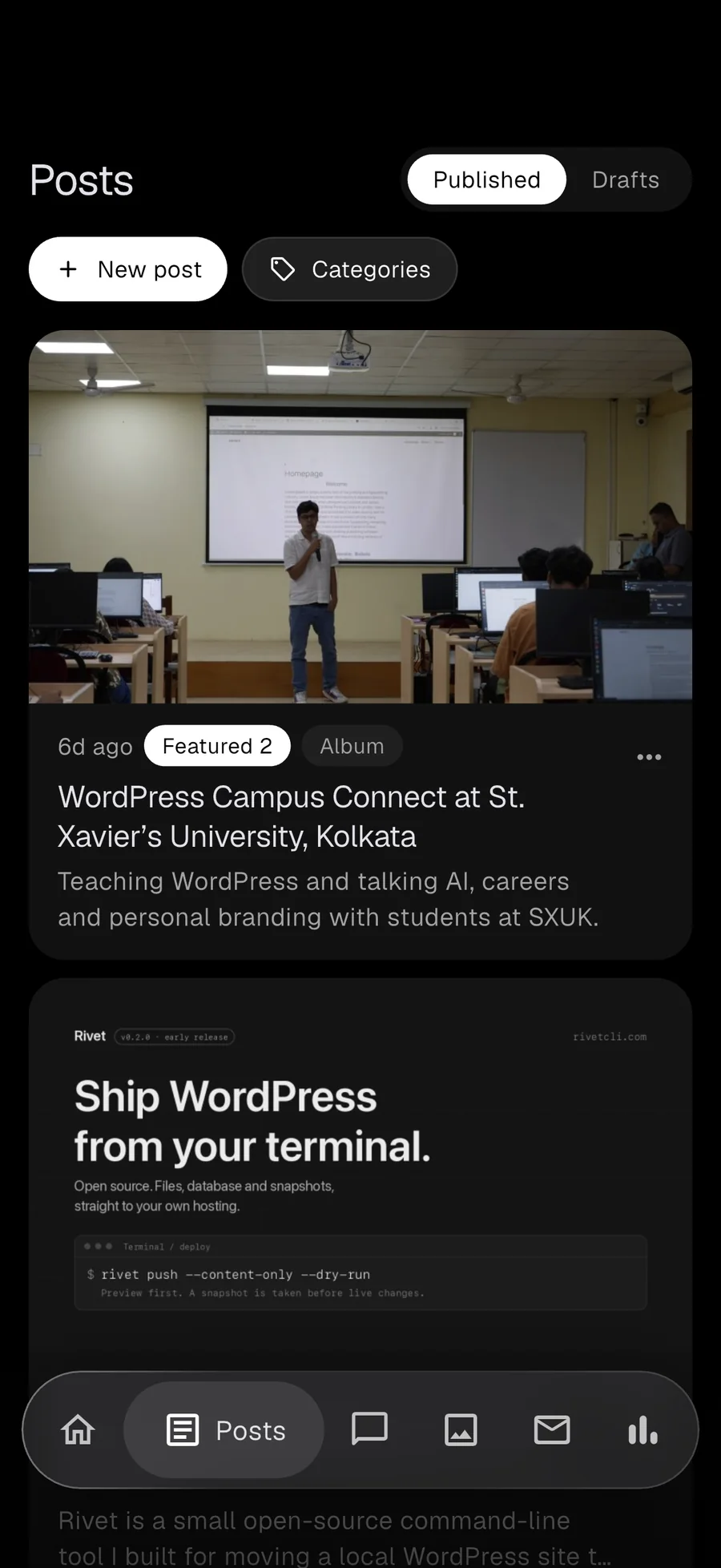
The app runs on Android and iPhone (the screens here are the iPhone version) and manages the whole site: an overview, posts, notes, photos and albums, a media picker that uses the phone’s camera, library or the site’s own library, an inbox with comments and messages, and insights. It signs in with a WordPress application password kept in encrypted storage and nothing else is stored on the phone.
- A real block editor. Posts are edited as WordPress blocks. A block that was not changed is written back exactly as it was read, and a block the app does not know (columns, buttons, plugin blocks) is kept whole. A test holds a post exactly as WordPress saves it and checks that it survives a round trip byte for byte.
- One reader and writer in two languages. The web admin has the same block reader and writer in TypeScript, tested against the same post, so a post written in either opens unchanged in the other.
- Changes show in seconds. The site reads WordPress on every visit, so saving in the app is publishing.
Our Role at Pixelvise
Pixelvise handled the work end to end:
- Product, design and information architecture
- Remix front end, Cloudflare functions and caching
- WordPress plugins for notes, albums, messages, sharing and analytics
- A web admin with a tested block editor
- Android and iPhone apps in Flutter